Benjamin Franklin’s Journey from Slaveholder to Abolitionist
/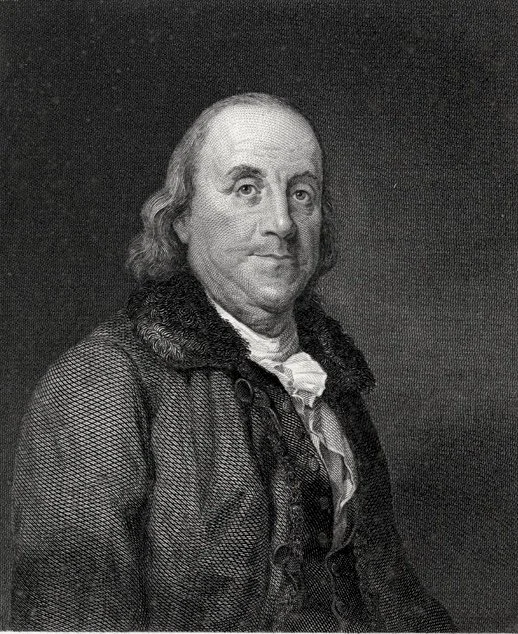
Benjamin Franklin, one of America’s Founding Fathers, was a master printer, inventor, and statesman whose ideas helped shape the nation. He created the lightning rod, contributed to the Declaration of Independence and the Constitution, and ran thriving printing establishments throughout the Colonies that spread news and sparked debate through his newspaper, the Pennsylvania Gazette, and his Poor Richard’s Almanack. Yet, Franklin’s story includes a complex relationship with slavery. He owned slaves, profited from printing advertisements for slave sales, and initially accepted the system without question. However, Franklin’s willingness to change in response to new information set him apart. Influenced by his time in England, his work with the Dr. Bray’s Associates, and his observation of the education of an enslaved boy named King, Franklin transformed from a slaveholder into an advocate for abolition. It is essential to understand Franklin’s life as a printer, his evolving views on slavery, and the experiences that led him to challenge the institution he once supported.
Franklin the Printer: A Business of Words and Influence
Born in Boston in 1706, Benjamin Franklin moved to Philadelphia as a teenager and became a printer, a trade that defined his early success. In the 18th century, printers were vital, producing newspapers, books, and pamphlets that connected people across the colonies. Franklin’s print shop was a busy hub, creating the Pennsylvania Gazette, a leading newspaper, and Poor Richard’s Almanack, packed with clever sayings and practical advice. Printing was a labor-intensive trade, requiring printers to set tiny metal letters by hand, ink them, and press them onto paper. Franklin relied on apprentices, young men who were bonded to a master printer to learn the trade, and built a network of print shops by helping partners start their own businesses in cities like New York and Charleston, much like a modern franchise system. This approach made him wealthy and spread his influence, as his publications shaped colonial thought and fueled revolutionary ideas.
Franklin’s print establishments produced more than just news. It printed government forms, legal notices, and advertisements, including advertisements for the buying and selling of enslaved and indentured people. These ads were common in colonial newspapers, and Franklin profited from them, though no evidence suggests he used enslaved compositors, press operators, or bindery workers in his printing establishments. Instead, his apprentices and hired workers handled the printing. However, throughout his life, Franklin’s household included free, white servants and several enslaved servants of African descent. Among the enslaved servants were Peter and Jemima, a married couple, purchased by the Franklins sometime before 1750. After preparing a will in which Peter and Jemima would be freed in the event of Franklin’s death, Franklin and his son William left for London in 1757. They brought Peter and another enslaved manservant named King with them. Jemima stayed behind with Franklin’s wife, Deborah, and a young boy named Othello, who may have been Peter and Jemima’s son. These household slaves performed tasks like cooking and cleaning, tying Franklin to slavery through his personal life and the ads his newspaper carried.
Franklin’s Early Acceptance of Slavery
In the 1700s, slavery was woven into the fabric of colonial life, with regional variations. In the South, like Virginia, where Thomas Jefferson owned over 600 slaves, enslaved people worked on large plantations growing tobacco and cotton. In the North, like Philadelphia, slavery was smaller-scale, with enslaved individuals serving as housekeepers, cooks, carpenters, or dock workers for wealthy families and businesses. Franklin, who became prosperous through printing, owned a few enslaved people, as was typical for successful Philadelphians, where owning slaves signaled wealth and status.
Franklin treated his slaves relatively well compared to some owners, allowing Peter and Jemima to live as a family and avoiding harsh punishments. However, owning people denied them freedom, and Franklin controlled their lives. In his 20s and 30s, Franklin gave little thought to slavery’s morality, viewing it as a standard part of society. His Pennsylvania Gazette regularly published ads for slave sales and runaways, which by the 1750s accounted for nearly a quarter of the paper’s advertisements, sometimes requiring extra pages to fit them all. Franklin transferred management of the Gazette to his partner, David Hall, in 1748, but the profits from those ads helped build his fortune, linking his printing success to the economy of slavery.
Franklin’s Life in England: An Anglophile’s Awakening
Franklin was a true Anglophile, deeply admiring British culture, science, and politics, and he spent nearly 20 percent of his life in England, from 1757 to 1775, across two extended stays. In 1757, at age 51, he arrived in London as Pennsylvania’s representative to resolve disputes with British authorities. He brought his son William and two enslaved individuals: Peter, who served Franklin, and 11-year-old King, who served William. Franklin settled in a house on Craven Street, near London’s vibrant core, and immersed himself in British life. He met scientists, joined intellectual clubs, and wrote articles, gaining fame as a brilliant American. He held royal appointments, such as deputy postmaster for the colonies, and believed the British Empire could unite Britain and America for mutual prosperity.
In 1758, Franklin, William, and Peter traveled to Ecton, a village 60 miles northwest of London, to trace Franklin’s family roots. At the local church, the rector showed them a 200-year-old register recording the births, marriages, and deaths of Franklin’s ancestors. The rector’s wife took them into the churchyard and showed them several gravestones covered with moss. She produced a stiff brush and a water basin, which Franklin’s slave, Peter, used to scrub the gravestones, enabling the discovery of Franklin’s relatives and allowing William to copy their inscriptions. They also discovered that the Franklin family had owned a 30-acre plot in Ecton since at least 1555, and Franklin considered repurchasing it, reflecting his deep connection to England.
England also exposed Franklin to antislavery ideas. In 1758, he met Anthony Benezet, a Philadelphia Quaker who visited London and condemned the cruelty of slavery. British Quakers, early leaders in the abolition movement, urged Franklin to reconsider his views. In 1759, Franklin visited schools run by the Dr. Bray’s Associates, an English group educating enslaved and free Black children. He was struck by Black students’ ability to read, write, and learn math, challenging his earlier belief that Black people were incapable of education. These encounters began to shift his perspective, setting the stage for his later transformation.
King’s Education: A Catalyst for Change
The experiences of King, the enslaved boy Franklin and William brought to London, may have contributed to Franklin’s evolving views. In 1758, shortly after the Ecton trip, King, then about 12, ran away from William in London. In 1760, Franklin wrote to Deborah, explaining that King had fled to Suffolk, eastern England, and was living with a Christian woman who taught him to read and write. This woman enrolled King in school, where he learned to play the violin and French horn, and other skills Franklin described as “accomplishments more useful in a servant.” King adopted the name John King, signaling his pursuit of independence.
Ultimately, Franklin, who valued such learning, left King in Suffolk, likely recognizing that education had unlocked King’s potential. This experience contradicted Franklin’s earlier view that Black people were “uncivilized” and unfit for learning, prompting him to rethink their capabilities.
Franklin as a Reluctant Revolutionary
Franklin was a reluctant revolutionary, initially favoring compromise with Britain over independence. He cherished the British Empire, believing it could benefit Britain and the colonies if America were granted greater freedom. In 1765, he supported the Stamp Act, a tax on paper goods, thinking it was reasonable. However, his Philadelphia constituents explained its harm to colonial businesses, prompting Franklin to testify against it in Parliament in 1766, helping secure its repeal and earning him acclaim in America.
By the 1770s, Britain’s policies, like the Tea Act, convinced Franklin that independence was necessary. This shift estranged him from his son William, a Loyalist who remained devoted to Britain as governor of New Jersey. Their disagreement over the Revolution led to a permanent rift, and they rarely spoke after 1776, illustrating the personal cost of Franklin’s changing loyalties.
Antislavery Influences in London and Paris
Franklin’s time in England and later in Paris exposed him to prominent antislavery thinkers who further shaped his views. In London, beyond Benezet and the Quakers, Franklin met Granville Sharp, a lawyer whose 1772 case involving an enslaved man, James Somerset, resulted in a ruling that limited slavery in England. Sharp’s advocacy inspired Franklin to see slavery as incompatible with justice. In Paris, where Franklin served as America’s ambassador from 1776 to 1785, he encountered Enlightenment philosophers like Condorcet and La Rochefoucauld, who condemned slavery and championed universal rights. These ideas resonated with Franklin, reinforcing his belief that slavery contradicted the principles of liberty he helped enshrine in the Declaration of Independence.
The Dr. Bray’s Associates and the Power of Education
Franklin’s involvement with Dr. Bray’s Associates was a cornerstone of his transformation. In 1759, he observed their schools in London, and in 1760, he helped establish one in Philadelphia for Black children, both free and enslaved. Witnessing Black students excel in reading, writing, and math disproved the notion that they were intellectually inferior, a belief Franklin had once held. This experience solidified his conviction that education could unlock potential, regardless of race.
Franklin’s ideals were shared by his wife, Deborah. In a letter dated August 9, 1759, she tells her husband of her desire to educate Othello, Peter and Jemima’s son. Deborah details that she “went to hear the Negro Children catechised at Church. There were 17 that answered very prettily indeed, and 5 or 6 that were too little, but all behaved very decently. Mr. Sturgeon exhorted them before and after the Catechising. It gave me a great deal of Pleasure, and I shall send Othello to the School.”
By this time, Franklin saw Othello as deserving of schooling, much like the students at the Dr. Bray’s school or John King in England. This shift wasn’t mere generosity—it marked Franklin’s recognition that Black children, given opportunities, could achieve as much as their white peers, challenging the foundations of slavery.
Franklin’s Antislavery Advocacy
By the 1780s, Franklin’s views had fully evolved. In 1787, at age 81, he became president of the Pennsylvania Society for Promoting the Abolition of Slavery, one of America’s first abolitionist organizations. In 1790, he sent a petition to Congress urging the end of slavery, arguing it violated the Declaration’s principle that “all men are created equal.” He also penned a satirical essay mocking slaveholders’ justifications, using his printer’s wit to expose their flaws. Unlike Jefferson, whose $107,000 debt and Virginia’s restrictive laws prevented him from freeing most of his 600 slaves, Franklin’s slaves were freed upon his death in 1790. Pennsylvania’s 1780 gradual emancipation law facilitated this, but Franklin’s decision reflected his commitment to abolition. He left funds for Black schools in his will, underscoring his belief in education as a path to equality.
Franklin’s Printing Legacy and Transformation
Franklin’s printing career was central to his life, giving him a platform to shape ideas. His Pennsylvania Gazette profited from slave ads, tying him to slavery’s economy, but it also amplified his voice as he began to oppose the system. His franchise-like network of print shops, built on apprentices rather than enslaved labor, spread his influence and distinguished his work from that of southern planters like Jefferson, who relied on large enslaved workforces. Franklin’s willingness to change was remarkable. Early in life, he accepted slavery, but encounters with antislavery thinkers like Granville Sharp, Condorcet, and La Rochefoucauld, the success of the Dr. Bray’s schools, and King’s education opened his eyes. His rift with William over loyalty to Britain mirrored his broader shift from Anglophile to revolutionary and from slaveholder to abolitionist.
Benjamin Franklin’s journey with slavery reflects his capacity for growth in a world where owning people was common. As a printer, he built a business that profited from slave ads and owned slaves like Peter, Jemima, Othello, and King, seeing slavery as normal in his youth. Yet, his time in England, where he met antislavery advocates, and in Paris, where Enlightenment ideas flourished, changed him. King’s education in Suffolk, the Dr. Bray’s schools, and Franklin’s wish to educate Othello proved Black people’s potential, dismantling his earlier prejudices. By 1790, Franklin used his voice to demand the end of slavery, freeing his slaves and supporting Black education. His reluctant revolutionary path, marked by a split with his Loyalist son, shows the personal stakes of change. Franklin’s story teaches that even someone tied to a wrong system can learn, rethink, and act when faced with new truths, leaving a legacy of words and deeds that helped America move toward freedom.