8 Must Watch Documentaries About Printing and The Graphic Arts

The-Quarantine-Gazette.jpg

8 Must Watch Documentaries
About Printing and The Graphic Arts

Made it through all our film recommendations already? No problem, here are just a few of our favorite feature length documentaries about printing and the graphic arts industry.  Happy viewing friends!


PRINTING HISTORY

THE MACHINE THAT MADE US

A completely charming documentary hosted by a completely charming Stephen Fry. He, and just about everyone else in the film, aren’t afraid of hiding their absolute joy at retracing the footsteps of Johannes Gutenberg. They follow the life of Gutenberg and the many steps it took for him to turn out those famous Gutenberg Bibles. Stephen travels around the world to rediscover the art of papermaking, illuminations, and type casting (with friend of the Museum Stan Nelson, formerly of the Smithsonian National Museum of American History). A great look at Gutenberg and his press aka “The Machine That Made Us”

Watch Free on Top Documentary Films

91H2nL04HGL._SY445_.jpg

HARVEST OF WISDOM

Harvest-830x467.jpg

Originally made in 1994 this film covers a much wider range of history. From the origins of humanity and cave drawings to cuneiform and papyrus and then into Gutenberg and the advancements of printing. It has a short update added in 2014 to include the advancements of the 20 years between 1994 and 2014. The film ends by coming full circle, mentioning the pictograph plaque that was added to the Pioneer Space Craft that has been sent to drift in space indefinitely hoping that some extra-terrestrial will find this picture art and get some impression of humanity from it.

Watch Free on YouTube


LINOTYPE

LINOTYPE: THE FILM

An in depth look at the history of the amazing machine known as a Linotype. Viewers not only get a glimpse at the history of the machine but also useful tutorials on its mechanics and a sense of just how impactful this machine was on everyday life. The film doesn’t shy away from the reality of the machines future, it includes a devastating scene of a linotype being made into scrap metal. However, something tells me this film has more than inspired a new generation to take the preservation of the machine into their own hands.

Rent or Buy on Linotype: The Film Website

Linotype-film-poster.jpg

FAREWELL ETAOINSHRDLU

Etaoin shrdlu is the first two columns on the linotype keyboard and was often used as filler text in the case of a typo when using a linotype. “Farewell etaoin shrdlu” is a fascinating look at the inside of the New York Times print shop on July 1, 1978, the last day of hot type at The Times. It’s an in depth look at how a Newspaper shop worked with linotypes and how it worked once the switch to computers were made. 

Watch Free on YouTube

Farewell-etaoin-shrdlu.png

LETTERPRESS IN THE 21st CENTURY

PRESSING ON: THE LETTERPRESS FILM

A tribute and document of the modern letterpress community. It shows the wide array of current printers from the old hats to the new practitioners. We were lucky to have the Director and many of the stars at our screening of the film in 2017 during the APA Wayzgoose that took place at the Museum. If you were looking inspiration to take up letterpress printing (or retake up an old printing hobby), this is it.

Available for Digital Download, Blu-Ray & DVD
Stream on Amazon Prime
Stream with an LA Library Card on Kanopy

PressingOnTheLetterpressFilm-Poster-350x525.jpg

LOS ULTIMOS (ENDLESS LETTERPRESS)

In Argentina, facing the advance of new technologies, the print shops are closing. At the same time, a group of young people rediscovers the greatest technical innovation in the history of the written word: typesetting printing. But will it be difficult for them to learn the trade since it has always been passed down from master to apprentice – and they are outsiders? The last graphic mechanic of the country will be in charge of teaching them so that this ancient technique can withstand the passage of time.

View for Free on Vimeo

endless-letterpress-poster-480x686.jpg

TYPEFACE

A profile of the Hamilton Wood Type Museum in Two Rivers, WI. which is located in the factory building of the Hamilton Manufacturing Compnay that made wood type until 1985. With an overwhelming collection of woodtype, dedicated staff, and workshops, the Museum is dedicated to advance the understanding of our printing and design heritage. The film gives you a peek at the work that the Museum does and its outstanding collection. The film started as an effort to increase awareness of the Museum and keep it running, and it has done that, plus much more.

Rent or Buy on Amazon

typeface-doc-480x608.jpg

TYPOGRAPHY

HELVETICA

We imagine this pick might cause a little controversy, as Helvetica is not the most liked of fonts. Just ask our Curator Mark who’s not a fan. However, it’s quite something to be both internationally despised and celebrated. Follow the history of the font and how it came to be one of the foremost fonts used in the modern age. Its title sequence pays homage to the font’s letterpress roots as well. Plus, it features friend of the Museum Erik Spiekermann.

Rent or Buy on Amazon
Stream with an LA Library Card on Kanopy

helvetica-doc-480x672.jpg

Narrowing this list down to just a few films was difficult as there is a plethora of great videos about the graphic arts. If you enjoy these films continue to explore all the short form documentaries that can be found on Youtube, Vimeo and other streaming sites. 

Look out for more viewing suggestions coming soon!
WOMEN IN PRINTING HISTORY PART 1:Female Incunabula Printers

< Back to Blog

WOMEN IN PRINTING HISTORY PART 1:
Female Incunabula Printers


Lady-Printer-Image-small.jpg

From the beginning of printing with movable type in Europe, women were employed in the industry. In fifteenth and sixteenth-century Italy, there were more than fifteen female religious houses that were sites of book production. Almost two-thirds of these were located in Florence.

One such location was the Convent of San Jacopo di Ripoli in Florence. It was here that nuns produced liturgical manuscripts throughout the Middle Ages and Renaissance.In the 1470s, a printing press was established at their house. This was only the second printing press to be located in Florence and the first to produce a substantial body of work. According to the records of the San Jacopo di Ripoli 

print shop, much of the convent’s typesetting was done by a nun, Suor (Sister) Marietta. During the nine years the convent was in business, this print shop printed over 100 secular and religious titles (12,000 volumes) as well as pamphlets and broadsides.

Further north and a few years later, another woman was making her mark in the printing industry.

In 1470, Johann Heynlin and Guillaume Fichet established the first printing press in Paris. They first set up shop at the Sorbonne and then moved to Rue St. Jacques. Within three years, two of their apprentices set up a competing printing press on the same street. Due to the proximity of the Sorbonne, many other booksellers and printers also set up shop here.

yolande-Bonhamme.png

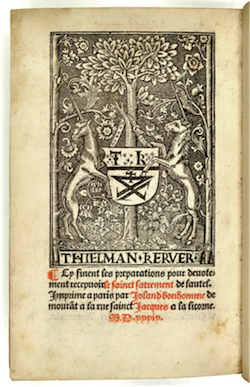
One such printer and bookseller was Pasquier Bonhomme. Yolande Bonhomme, his daughter, had various responsibilities within her father’s shop. In due time, she married a highly successful printer, Thielmann Kerver. When he died in 1522, Yolande assumed control of his print shop located on the Rue St. Jacques in Paris. She specialized in illustrated Books of Hours (private prayer books for lay worshippers). In 1526, she became the first woman to print an edition of the Bible. At the time of her death in 1557, her press was one of the most successful and respected in Paris.

In the colophon on the final page of a French devotional book printed by Bonhomme (pictured here), she wrote, “Imprime a paris par Yoland bonhomme de mourat a la rue saint Jacques a la licorne.” Roughly translated, it says, “Printed in Paris by Yoland Bonhomme de Mourat at Rue Saint Jacques at the sign of the unicorn (the company’s logo).

To learn more about the #GirlsWhoPrint and #PrintHerStoryMonth initiative visit GirlsWhoPrint.net

WOMEN IN PRINTING HISTORY PART 2:Women Printers in the American Colonies

< Back to Blog

WOMEN IN PRINTING HISTORY PART 2:
Women Printers in the American Colonies


Sarony &amp; Major. “The landing of the Pilgrims, on Plymouth Rock, Dec. 11th 1620.”​ c1846. Prints and Photographs Division, Library of Congress.

Sarony & Major. “The landing of the Pilgrims, on Plymouth Rock, Dec. 11th 1620.”​ c1846. Prints and Photographs Division, Library of Congress.

The Great Puritan Migration

In 1638, as Puritans continued to leave England for the new world, one particular immigrant had an idea different from all the rest. Reverend Jose Glover had a plan to bring a printing press to the Massachusetts Bay Colony. He secured passage on the ship John of London for himself, his wife and five children, servants, and household furnishings. He also brought a printing press, 240 reams of paper, and a case of assorted type.

Unfortunately, Reverend Glover never lived to see his dream of setting up a print shop in the new world fulfilled. During the voyage from England, Glover contracted a fatal illness, probably smallpox, and died.

0-350x569.jpg

Once the ship arrived at the Massachusetts Bay Colony, Reverend Glover’s wife, Elizabeth, took matters into her own hands and went to work on setting up shop. Mrs. Glover purchased a house for Stephen Day, an indentured locksmith, who was under financial contract to her husband. The press was placed in one of the rooms of this house. Most historians believe that it was in this house, in 1639, that Stephen Day and his son Matthew printed The Freeman’s Oath broadsheet.

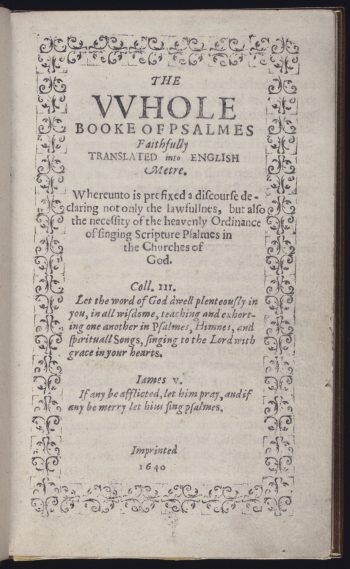
In 1640, after the printing of The Freeman’s Oath and an almanac, Stephen and Matthew began work on the first book published in the American colonies, The Whole Booke of Psalmes.

On June 21, 1641, Elizabeth married Henry Dunster, the first president of Harvard. For the next two years, Elizabeth maintained control of the press. It wasn’t until her death in 1643 that her land and property, including the printing press, was passed on to Dunster and subsequently to Harvard College. During the same year, Matthew Daye replaced his father as the official operator of the press after the elder Daye was briefly jailed for fraud.

On November 26, 2013, a copy of The Bay Psalm Book sold for almost 14.2 million dollars, the most costly book in the world at the time.

The Franklin Legacy

Women printers also figured prominently during the American Revolution, due in some part to the help of Founding Father, Benjamin Franklin.

0-1.jpg

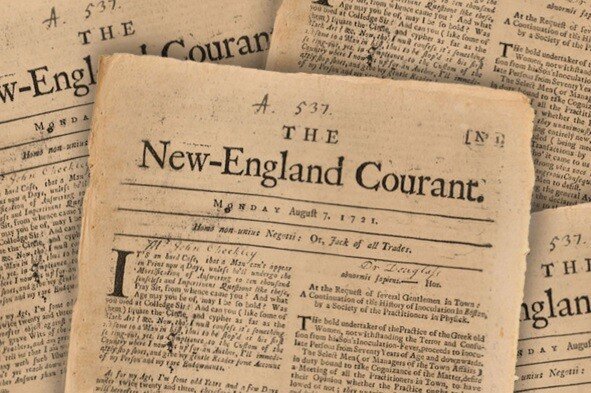
As a young boy of 12, Franklin was indentured to his older brother James. Beginning in 1721, James, his wife, Ann, and brother, Benjamin, worked together to publish the first independent American newspaper, the New-England Courant. That early print training benefited both Benjamin and Ann later in life.

In 1731, Benjamin Franklin took his training and experience in the printing industry and turned it into a franchise. Franklin helped his best employees, and others interested in the industry, start their own printing business. He would buy the equipment and pay the rent on the shop for six years. At the end of six years, his partners had the option to buy Franklin out and run the business on their own or maintain the partnership. By the time he retired as America’s first millionaire, Franklin’s printing empire had reached from New England to the Caribbean.

In 1734 Franklin entered into a business agreement with Lewis Timothy. Later, when discussing Lewis’ business sense, Franklin wrote, “He was a man of learning, and honest but ignorant in matters of account; and, tho’ he sometimes made me remittances, I could get no account from him, nor any satisfactory state of our partnership while he lived.”

Five years into their six-year agreement, on January 4, 1739, the South-Carolina Gazette noted that Lewis Timothy had died due to “an unhappy accident.” Following the death of her husband, Elizabeth Timothy became the first woman publisher of a newspaper in America. For seven years, she published the South Carolina Gazette in Charleston, in partnership with Franklin. And, in essence, became the first female franchisee.

While Franklin was not impressed with Lewis Timothy’s business sense, he felt the opposite of Elizabeth’s ability to run a print shop. “Her accounts were clearer, she collected on more bills, and she cut off advertisements if payments were not current,” said Franklin.

Franklin even mentioned Elizabeth in his autobiography. He said Elizabeth operated the Gazette with “regularity and exactitude… and managed the business with such success that she not only brought up reputably a family of children but at the expiration of her term was able to purchase of me the printing house and establish her son to it.”

Benjamin Franklin’s early training led to his business success. In much the same way, his sister-in-law, Ann Franklin’s printing experience, provided her with a solid business background that would serve her well. At the same time, it brought Benjamin Franklin full circle, back to his printing roots. 

James and Ann Franklin

In 1727 James and Ann Franklin moved to Newport, Rhode Island, and opened the colony’s first print shop. By 1732 the couple started the Rhode-Island Gazette. James was the editor, and Ann worked as an assistant printer. Ann knew how to both set type and operate the press. According to Dorothy A. Mays, in her book, Women in Early America: Struggle, Survival, and Freedom in a New World, “Ann was an active participant in her husband’s print shop.”

In 1735 James became ill, and his brother Benjamin came to Newport for a visit. Benjamin promised James, who was on his deathbed, he would bring up his six-year-old son, James Jr., in the printing industry. After James succumbed to his illness on February 4, 1735, Ann’s extensive printing and business experience allowed her to take over the business. Soon thereafter, James Jr. or Jemmy, as he was called, went to Philadelphia with his uncle.

1-350x636.jpg

Within a year of her husband’s death, Ann secured the lucrative position of the official printer for the Rhode Island assembly. In her post, she printed the colony’s charter granted by Charles II of England. She also printed sermons for ministers, advertisements for merchants, as well as popular British novels.

While Ann Franklin ran the printing business in Newport, Jemmy studied with a private tutor along with his cousin in Philadelphia. In 1740, at the age of 10, he signed his Indenture papers and became apprenticed to his uncle Benjamin.

Ann Smith Franklin, now a master craftsman, trained her two daughters, Mary and Elizabeth, as typesetters and shopkeepers. After serving his apprenticeship, Jemmy returned to Newport, and in 1748 he became a partner in his mother’s printing business. Their company continued to produce books, almanacs, pamphlets, and legal announcements.

Look closely at the Acts and Laws image and you’ll see “Printed by the Widow Franklin…”

Ann Smith Franklin died in 1763 and was buried in the Newport Common Burying Ground and Island Cemetery.

WOMEN IN PRINTING PART 3:Women Printers in the 19th Century

< Back to Blog

WOMEN IN PRINTING PART 3:
Women Printers in the 19th Century


a-1.jpg

The Industrial Revolution

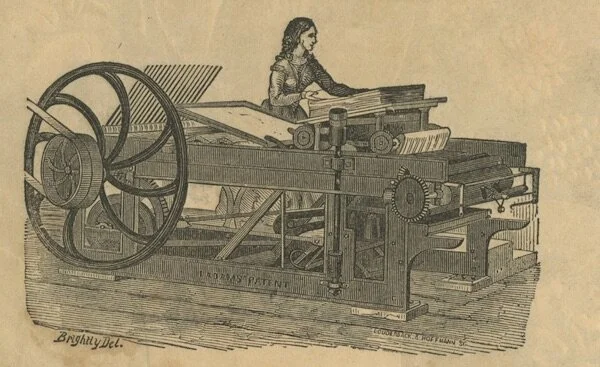
New technologies had an enormously positive impact on the printing industry during the Industrial Revolution. This was the time of Lord Stanhope and his cast-iron press. In Europe, the flatbed printing press was replaced with the cylinder press thanks to Koenig and Bauer. And in America, Richard M. Hoe’s steam-powered rotary printing press allowed the printing of millions of copies of a page in a single day. It was during this time that Lydia Bailey took over her husband’s printing business, and its many debts, to support herself and her four children.

Lydia Bailey with composing stick in hand and printed book, artist Jacob Eicholtz

Lydia Bailey with composing stick in hand and printed book, artist Jacob Eicholtz

Lydia was no stranger to the printing industry. Her father came from a dynasty of printers and papermakers. Her uncles on her father’s side operated a busy paper mill outside of Lancaster, Pennsylvania. Her uncles on her mother’s side, Jacob and Francis Bailey, were successful revolutionary-era printers. In addition to printing the first edition of the Articles of Confederation and copies of Thomas Paine’s Common Sense, Francis Bailey acted as printer for Congress and the Commonwealth of Pennsylvania. With a background like this, Lydia was the perfect person to take over a failing printing business.

Lydia’s husband, Robert, was a terrible businessman. He made it a practice to extend credit. And, as any printer knows, this can only lead to disaster. When he died in 1808, Lydia found herself the owner of a floundering printing business. But, due to her keen business sense, within four years of Robert’s death, Lydia was winning praise from her contemporaries. She was doing so well that in 1813 Bailey obtained the contract to become Philadelphia’s official city printer, a post she mostly held until the mid-1850s.

Lydia Bailey not only ran the business, she learned to set type. She also claimed to have instructed “forty-two young men, including some of the city’s future master printers, in the typographic arts.”

Bailey’s shop, at its peak, was one of the largest in the city, employing more than forty workers. This was due in large part to her decision to change the focus of the company from being both a publisher and printer to focus strictly on job printing. While the shop continued to print some small publications, her primary work consisted of contract job printing, including blank forms, cards, receipts, handbills, legal documents, bills of lading, and the like. Much of this steady work came from contracts she acquired for job printing with the University of Pennsylvania and various banks and canal companies.

Lydia Bailey’s career spanned more than half a century. In 1869 she died in Philadelphia at the age of ninety. 

Women Printers in the United Kingdom

In 1860 a group of women involved in the British suffrage movement, led by women’s rights activist Emily Faithfull, founded Victoria Press in London, England. Faithfull advocated for women’s rights. She fought so women could have the opportunity to work at well-paying jobs the same as men. Faithfull’s goal with Victoria Press was not just to print pamphlets and publications that promoted the movement, but to have those materials produced by women.

d-350x565.jpg

The most notable book issued by the press was The Victoria Regia: A Volume of Original Contributions in Poetry and Prose. Edited by Adelaide A. Proctor, in 1861. The book highlighted the poems and writings of women while also demonstrating the typesetting prowess of the female compositors.

Faithfull’s printing operation caught the attention of Queen Victoria, and in 1861 Faithfull was appointed by royal warrant ‘Printer and Publisher in Ordinary to Her Majesty.’

In 1863, Faithfull began publishing The Victoria Magazine. Through this magazine, she continued to advocate for a women’s right to fair and equal employment opportunities.

In 1867 Faithfull turned over management of the press to William Wilfred Head, a partner in the press. Head bought Faithfull out in 1869.

After her success with The Victoria Press, Faithfull, along with English feminist and trade unionist Emma Paterson, went on to establish the Women’s Printing Society, in 1878.

The company published feminist tracts while providing employment opportunities for women. According to James Ramsay MacDonald in his book, Women in the Printing Trades: A Sociological Study, “the Women’s Printing Society was set up to allow women to learn the trade of printing, and provided an apprenticeship program.” By 1899, the company employed 22 women as compositors. Women also worked as proofreaders, bookkeepers, and managers.

Women Printers in San Francisco

During this same time, San Francisco was becoming a printing and publishing hub. According to Libby Ingalls in her Historical Essay, Women in Printing, “In the 1860s, typesetting was the most prestigious job for women in San Francisco. The job required skill in spelling and grammar, along with manual dexterity, so typesetters tended to be better-educated and fast learners. But opportunities were extremely limited. The strong prejudice against women in the workplace locked them out of higher-paid jobs.”

Due to the California gold rush in 1849, the need for printed materials exploded. Newspapers, legal documents, broadsides, and the like were needed to run businesses and the state and local governments. The work was there, but according to Ingalls, “Men did not want to work side by side with women, unions banned them, their salaries were lower, and they were not permitted apprenticeships or technical training.”

After years of fighting for their rights, women finally had a champion to help voice their opinion. In 1858 Mrs. A.M. Schultz and her assistant, Mrs. Hermione Day began publishing a new woman’s literary magazine, The Hesperian. The magazine took on labor issues related to women, including employment inequality, lack of opportunity, and lower wages for women.

Within two years, Day took over the business and expanded beyond magazine publishing to job, book, and fancy printing. Along the way, she hired women to work for her company.

Women’s Co-operative Printing Union

b-1.jpg

In 1868, Mrs. Agnes B. Peterson and other trained female typesetters came from back east to California. While trying to find work to support herself and her child, Peterson ran into some difficulties. According to The Ladies’ Repository, Volumes 39-40, Peterson found that the owners of the print shops were “quite willing to give me employment, but the Typographical Union refused to permit me to work….”

The problem hinged on the fact that the women typesetters refused to work for less than the Union rates for men. The Union exercised power over most of the printers in San Francisco, so these companies denied work to the women “even in instances where they needed more help than they could obtain from the ranks of good male compositors.”

Peterson and her female typesetting companions fought back against the Union. With the help of Wells Fargo Bank, the women obtained financing and, in 1869, co-signed incorporation documents to create the Women’s Co-operative Printing Union (WCPU).

The women rented space, bought presses and cases of type, and started to work. One of their first clients was Wells Fargo. The WCPU printing checks for the bank.

According to Ingalls, during the next 18 years, “the WCPU printed every variety of book, including fiction, nonfiction, children’s books, and cookbooks, along with Spiritualist and feminist journals.”

e-480x674.jpg

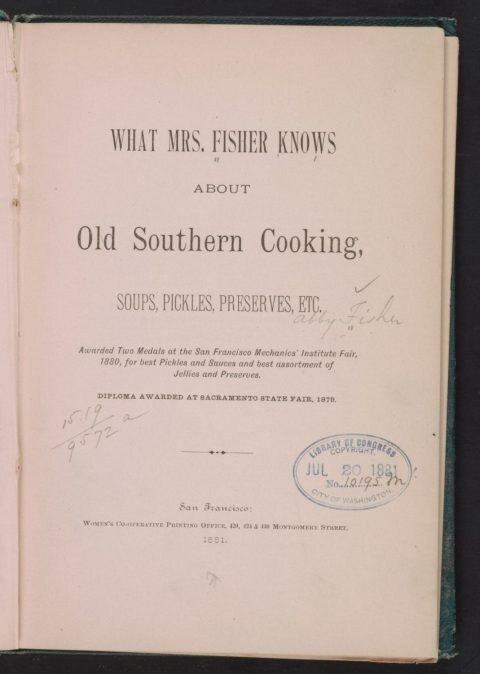
One book of particular note is believed to be the first cookbook by an African American. The book, by Mrs. Abby Fisher, was entitled What Mrs. Fisher knows about old southern cooking, soups, pickles, preserves, etc.

Fisher was a fantastic cook. In 1877, soon after she, her husband and 11 children migrated from Mobile, Alabama to San Francisco, California, she put her talents to work. Fisher opened Mrs. Abby Fisher & Co., a pickle and preserves manufacturing business.

In 1879 Fisher entered her tasty preserves in the Sacramento State Fair and won big. In 1880, she won a bronze medal for the best pickles and sauces, and a silver medal for the best assortment of jellies and preserves at the San Francisco Mechanics’ Institute Fair. The jurors later wrote that “her pickles and sauces have a piquancy and flavor seldom equaled, and, when once tasted, not soon forgotten.”

With a flourishing company and awards and ribbons to confirm her culinary abilities, a book deal was a logical next step.

In the preface of her book, Fisher suggests that friends and patrons alike encouraged her to keep a written record of her recipes. This, though, presented a problem. Fisher was an ex-slave who could neither read nor write.

Abby Fisher had all of her recipes in her head. Now she needed to get those into print. When you think of the obstacles faced by Agnes Peterson and the other female typesetters who started the WCPU, you can understand why this cookbook would be the perfect project. As Tricia Martineau Wagner wrote in her book African American Women of the Old West, “These women would have been very sympathetic to assisting a female in getting her cookbook published.”

Fisher’s recipes would first have to be transcribed before they could be typeset and printed. But the women of the WCPU would happily do so “in order to preserve some of the best southern cooking of their day.”

The International Typographical Union

In 1876 the International Typographical Union (ITU) revised its rules, giving the local organizations full discretion in the admission of women. According to Ingalls, “San Francisco Local #21 still refused.” It wasn’t until 1883 that the ITU opened membership to women in all Locals. Once admitted, women received the same pay and protection as their male counterparts.

The 19th century was a difficult time for women in the printing industry. They faced opposition but also fought and won against the forces that tried to keep them down.

Next week we will cover a female printer of the 20th century. Our fourth and final installment of Women in Printing History may surprise you.

To learn more about the #GirlsWhoPrint and #PrintHerStoryMonth initiative visit GirlsWhoPrint.net

WOMEN IN PRINTING HISTORY PART 4:Women Printers in the 20th Century

< Back to Blog

WOMEN IN PRINTING HISTORY PART 4:
Women Printers in the 20th Century


2-480x656.jpg

To round out our discussion of Women in Printing History, let’s take a look at a woman better known for her writing than for her printing. What started for her and her husband as a hobby turned into a fulltime publishing business. This Saturday, March 28, marks the 79th anniversary of her death.

Virginia Woolf was born on January 25, 1882. After the death of her mother, Virginia experienced her first mental breakdown. She was only 13 years old. Two years later, her half-sister and a mother figure to her, passed. Ten years later, Virginia’s father, who encouraged her to begin writing professionally, passed away, and she once again suffered a mental breakdown.

Woolf was troubled by her mental illness throughout her life. These mental challenges, incidentally, were instrumental in her becoming a typesetter and printer.

The Founding of Hogarth Press

Virginia married Leonard Woolf in 1912. Leonard was a journalist, publicist, and writer on political topics. Early in March 1915, the couple moved to Hogarth House in Paradise Road.

In 1913, Virginia completed her first novel, The Voyage Out. The writing of this book, as with each book she wrote, left her in a state of extreme physical, mental, and nervous exhaustion. In September 1913, she attempted to take her own life. By the summer of 1914, she appeared to have fully recovered from her depression. In February 1915, however, there was another, more violent recurrence of the illness.

From the beginning of their marriage, Leonard was concerned about Virginia’s mental peace. While looking for ways to keep her mind occupied, the two started talking about typesetting and printing. Leonard felt the manual labor would give her something to occupy her mind when she wasn’t writing.

In 1916, the couple went so far as to inquire about classes at Saint Bride Foundation Institute Printing School. They were turned down because the courses offered by the school were only open to trade union apprentices.

Richard Kennedy. Virginia Woolf Setting Type: ink and graphite drawing

Richard Kennedy. Virginia Woolf Setting Type: ink and graphite drawing

Then, on the afternoon of March 23, 1917, Leonard and Virginia were walking down Farringdon Road in London when they passed the Excelsior Printing Supply Company. The company’s window display caught their attention. In his autobiography, Leonard described how they felt. “Nearly all the implements of printing are materially attractive, and we stared through the window at them rather like two hungry children gazing at buns and cakes in a baker shop window.”

Once inside the supply company, the two spoke with a sales assistant in brown overalls. In true print sales fashion, the sales rep convinced them that they didn’t need any classes. All they needed was a 16-page booklet, which had all the information they needed to get started in the industry.

Within no time at all, and for less than £20, the Woolfs became the proud owners of a small hand-printing press, chases, cases with type and all the necessary implements needed to begin their career in the printing industry.

On the afternoon of April 24, 1917, Virginia and Leonard took delivery of the hand press. Later that day, Virginia wrote to her sister, “We unpacked it with enormous excitement, finally with Nelly’s help carried it into the drawing-room, set it on its stand, and discovered that it was smashed in half.” The parts needed to fix the press arrived several weeks later.

Hobby to Publishing Business

Once the press was fixed, the Woolfs became enamored with typesetting and the printing process. “We get so absorbed we can’t stop; I see that real printing will devour one’s entire life,’ Virginia Woolf wrote to her sister.

It didn’t take long for the press to turn from a hobby into a full-time business.

After a month of experimenting with setting type, inking woodblocks, and pulling impressions, the Woolfs felt confident enough to start printing.

3.jpg

Their first publication was a 31-page pamphlet entitled Two Stories. It was typeset, printed, stitched and bound by Leonard and Virginia. The booklet contained four woodcuts by the artist Dora Carrington. They made 150 copies, most of which were sold to friends and acquaintances.

They both enjoyed printing their first book. Virginia said she found the printing process “exciting, soothing, ennobling, and satisfying.” In addition to the gratifying work, sales were also successful. They sold 134 copies of the 150 run.

The act of typesetting itself had a strong influence on Virginia’s writing. In her unpublished essay “How Should One Read a Book?” she writes,

“Try to understand what a writer is doing. Think of a book as a very dangerous and exciting game, which it takes two to play at. Books are not turned out of moulds like bricks. Books are made of tiny little words, which a writer shapes, often with great difficulty, into sentences of different lengths, placing one on top of another, never taking his eye off them, sometimes building them quite quickly, at other times knocking them down in despair, and beginning all over again.”

Anyone who has set type by hand will recognize the process of typesetting, which is apparent within these words. Virginia Woolf biographer Hermione Lee, when referring to this passage, concludes that “The writer is imagined as a kind of mental compositor, and the reader is invited to think of the book not as a fixed object, but as a process—something like the process that goes into typesetting.”

Hogarth Press Grows

Virginia continues to write and set type while Leonard continues to print on the hand press. Hogarth Press allows the Woolfs to self-publish their work free from frustrating editors and free from censorship.

Eventually, they bought a larger printing press and moved into a more prominent place. Soon they needed assistants and managers, and the business prospered.

In the following years, in addition to publishing Virginia’s works, they print for authors such as T.S. Eliot and Gertrude Stein. They were the first to publish the complete works of Sigmund Freud in English.

In 1938, Virginia sold her share of the business. A few years later, in 1941, she fell into a depression, much like the ones she had experienced in her earlier days. On March 28, 1941, Virginia left her house and took a walk by the river Ouse. She never returned. It was not until April 19, that the Associated Press announced to the public “Mrs. Woolf’s Body Found,” and confirmed she had drowned herself.

The Hogarth Press continued in operation until 1946.

We hope you have enjoyed these glimpses into the lives of women printers throughout the centuries. This four-part series covered just a small number of women who have had an impact on the printing industry.

To keep up with the women involved in the industry today follow the #printherstory and the Girls Who Print group on LinkedIn and on Facebook. You will also find the Girls Who Print website full of valuable information.

What’s In a Name? That Which We Call a Plaque

< Back to Blog

What’s In a Name? That Which We Call a Plaque


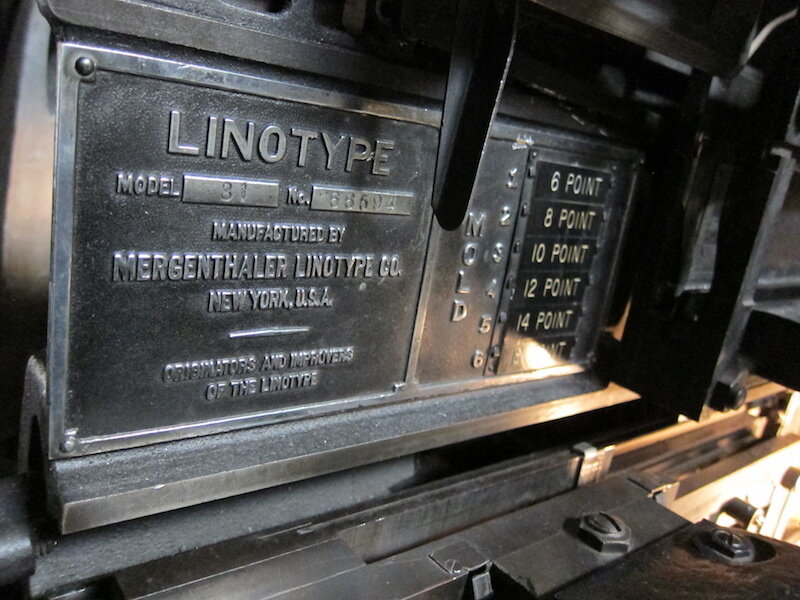
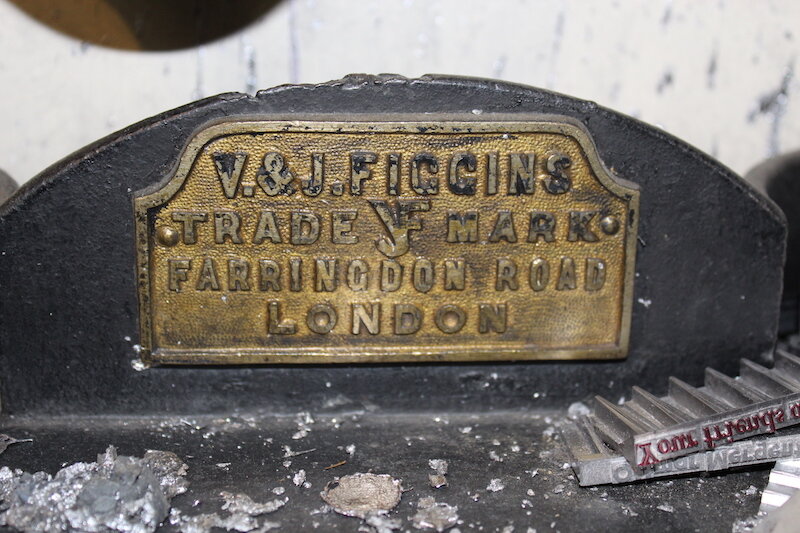
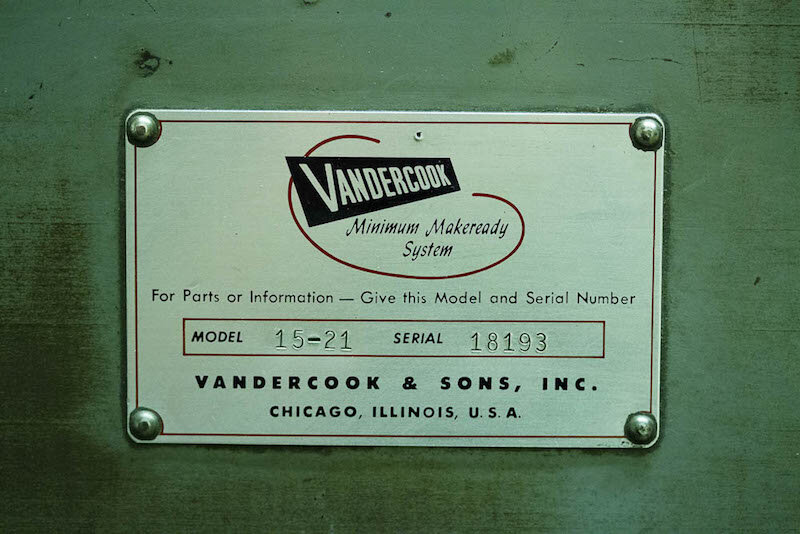
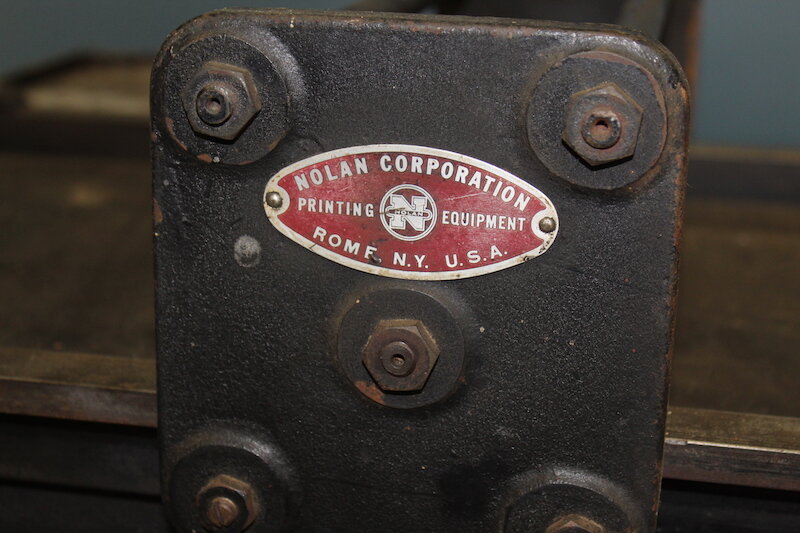
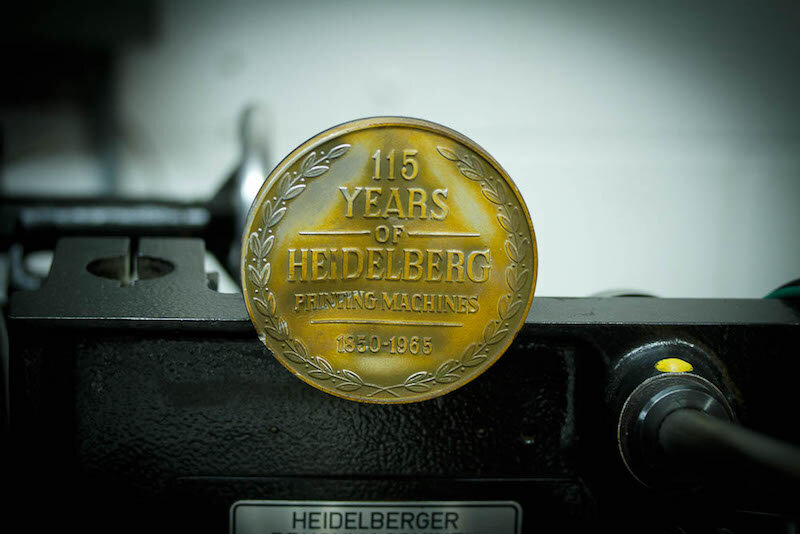
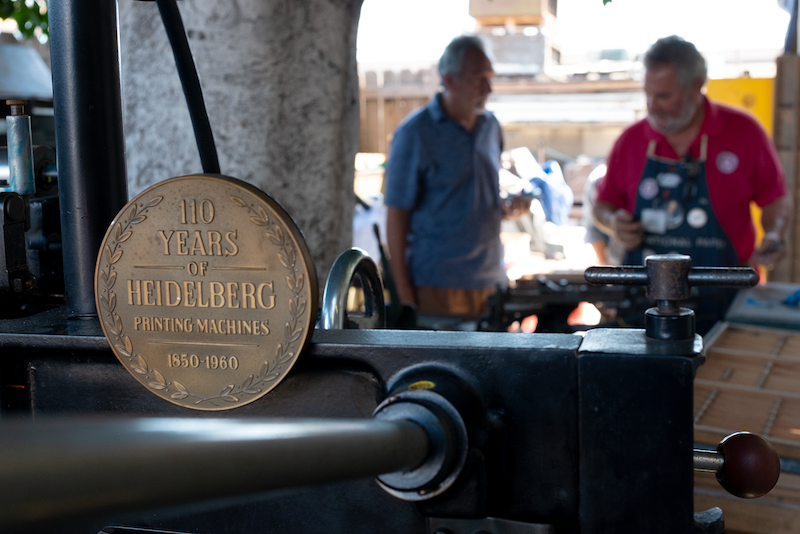
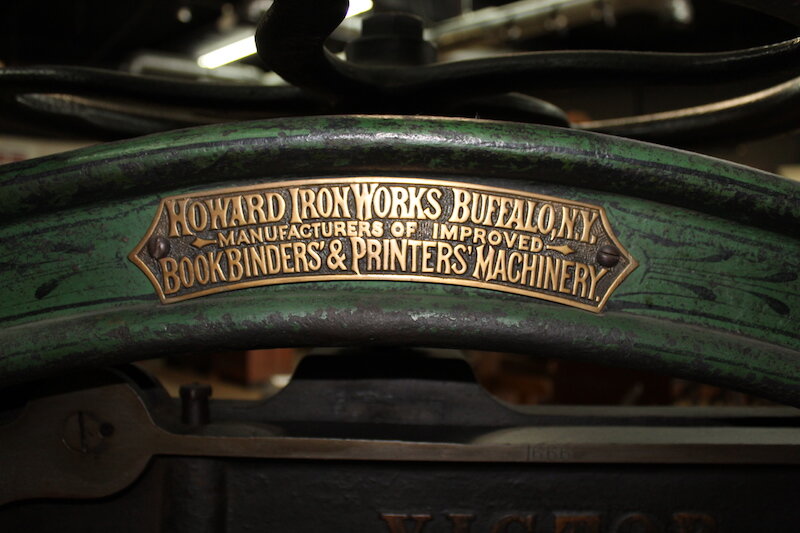
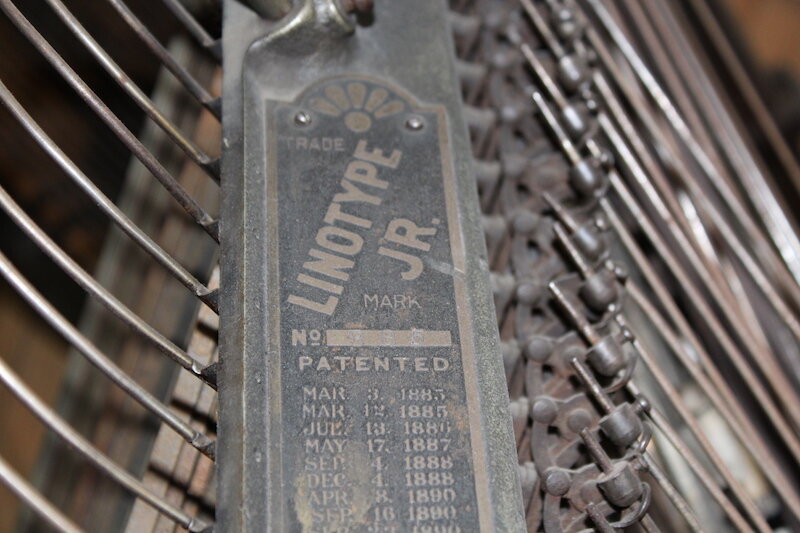
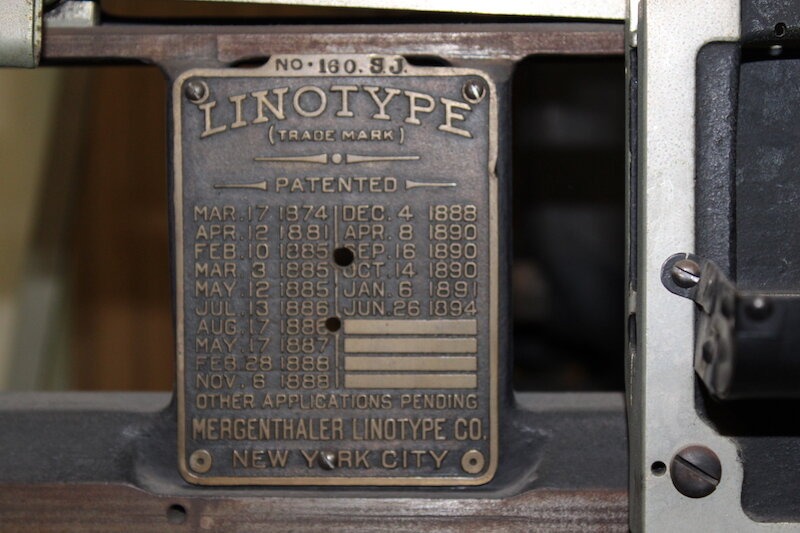
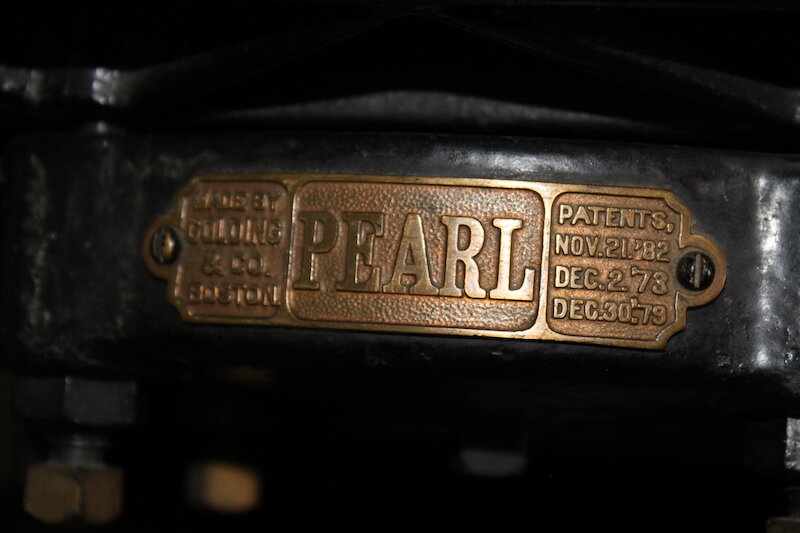
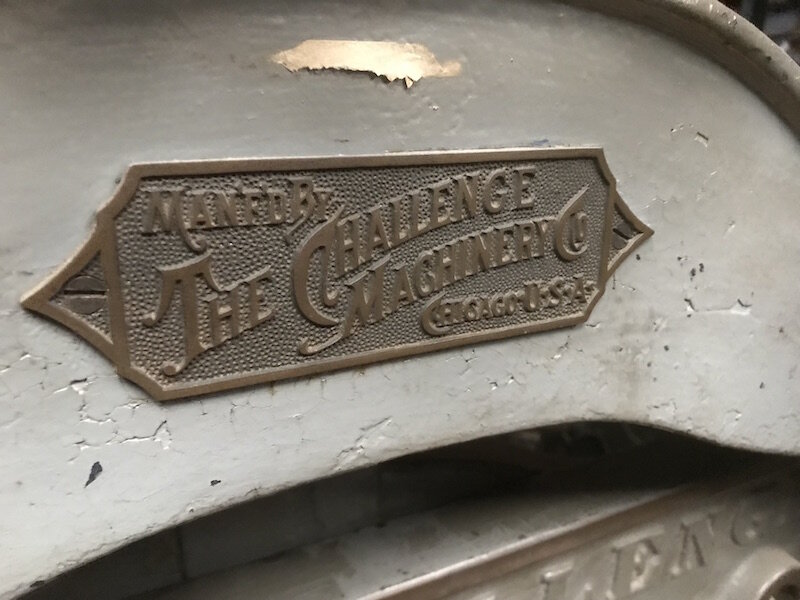
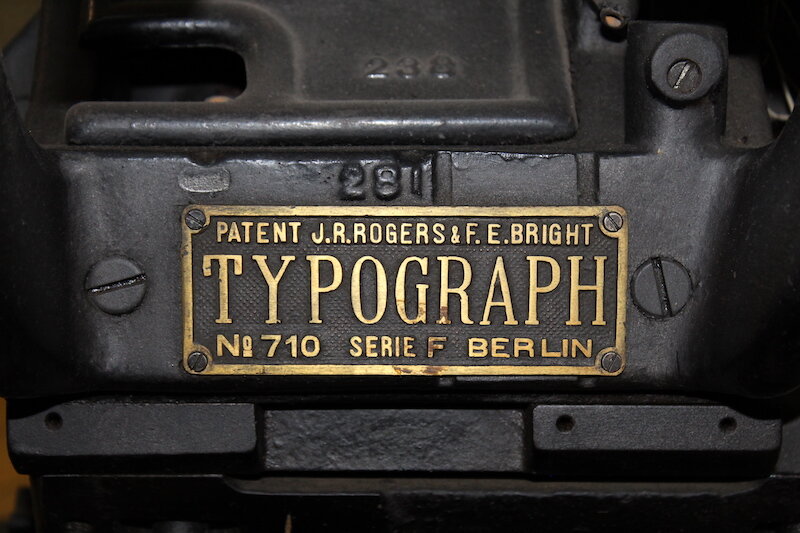
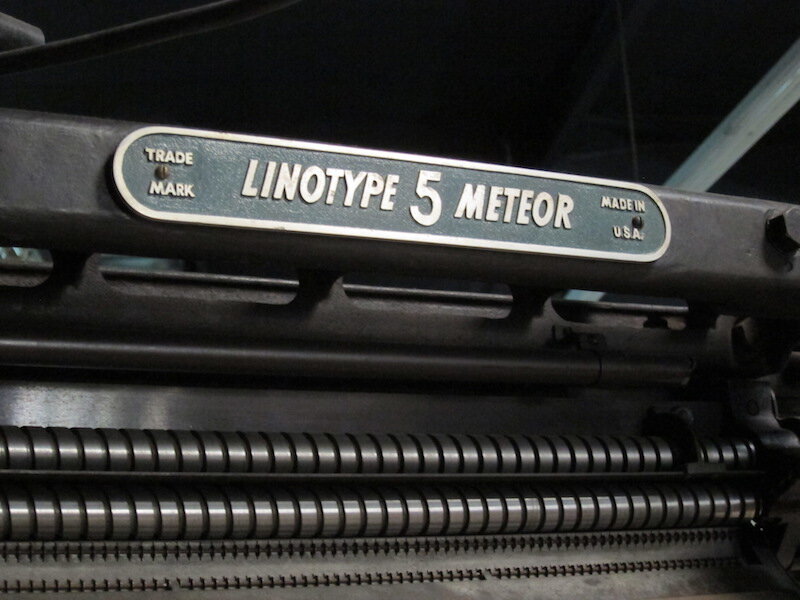
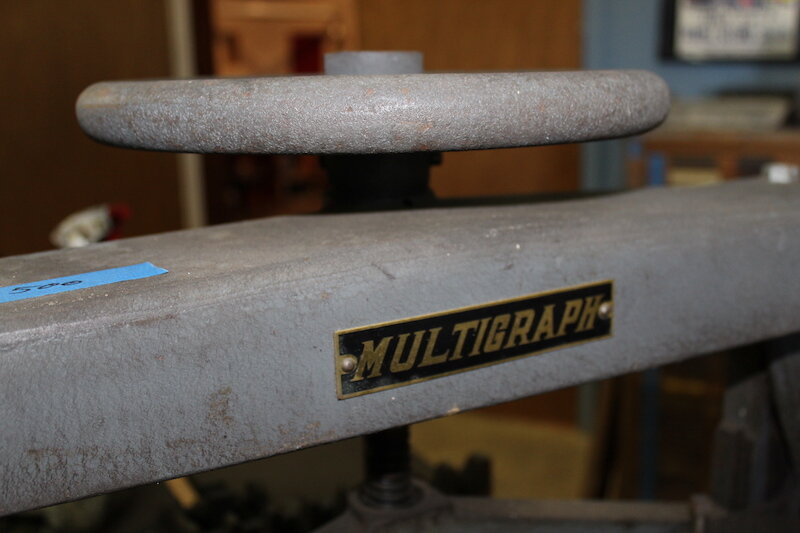
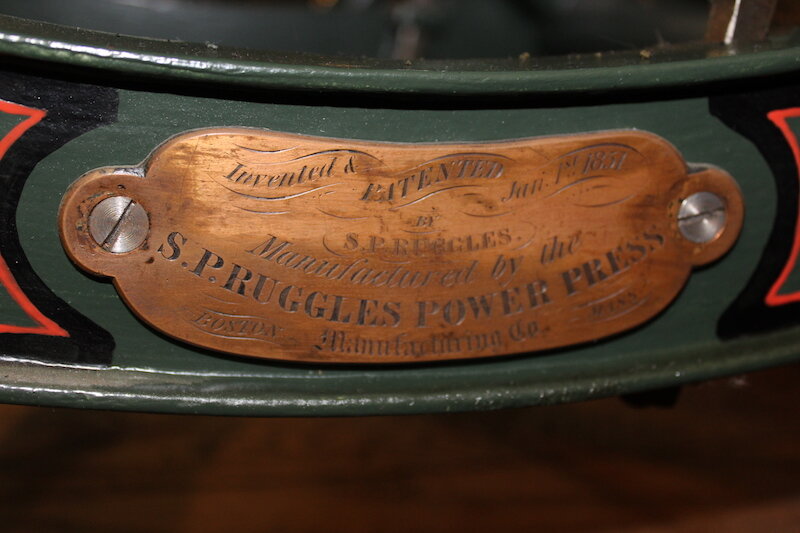
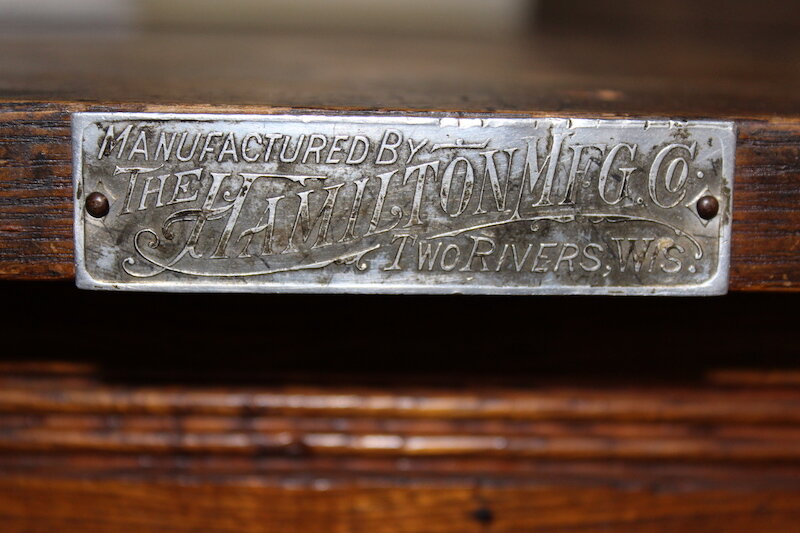
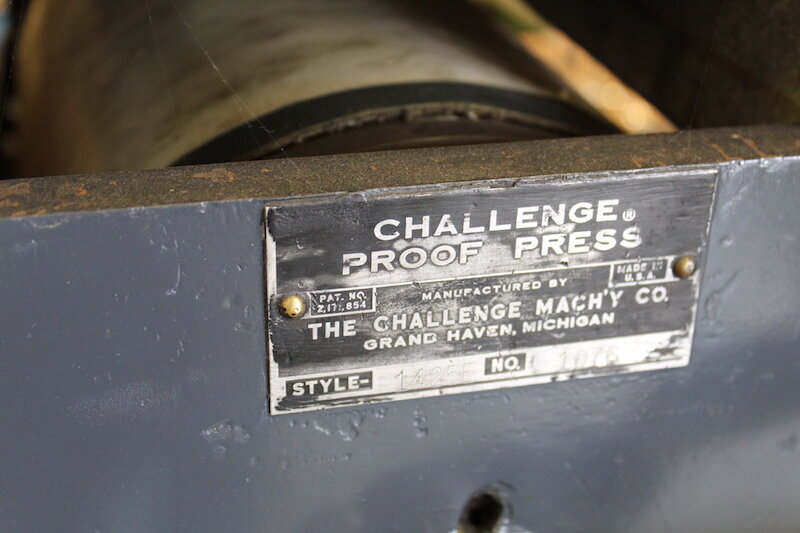
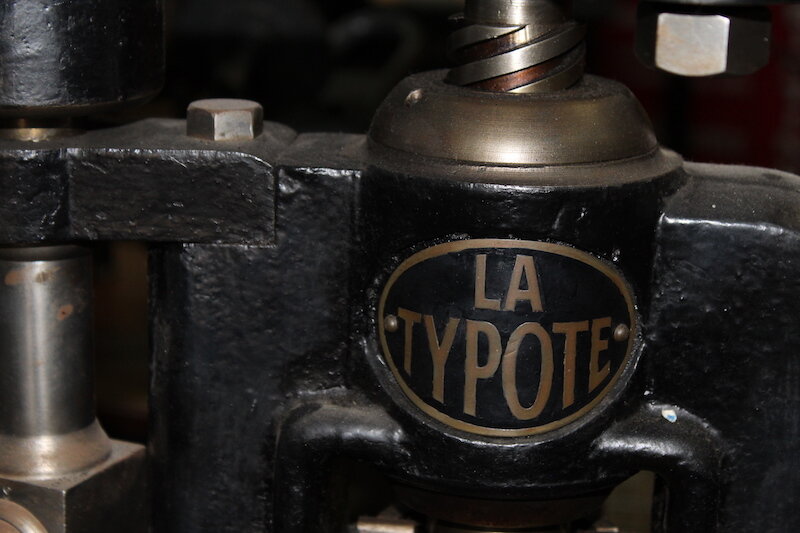
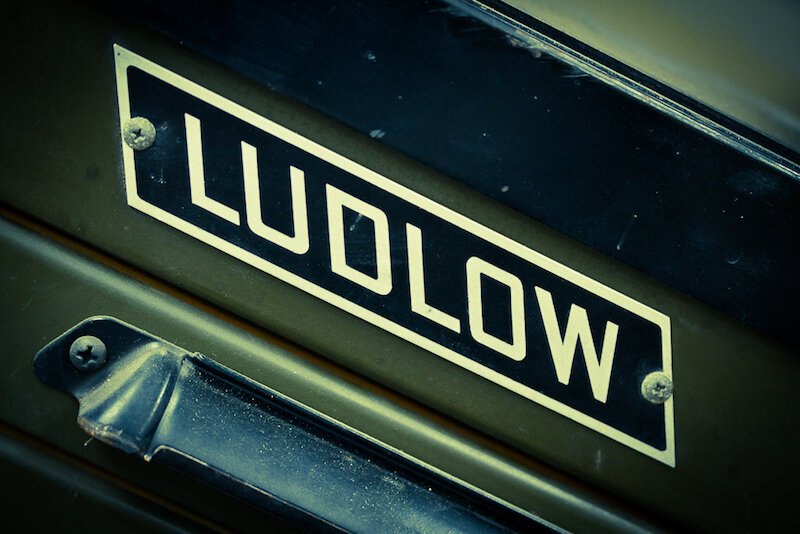
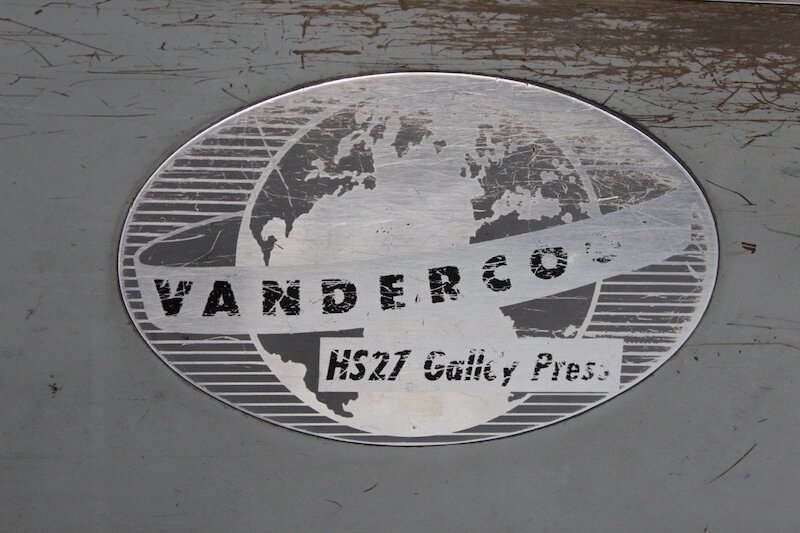
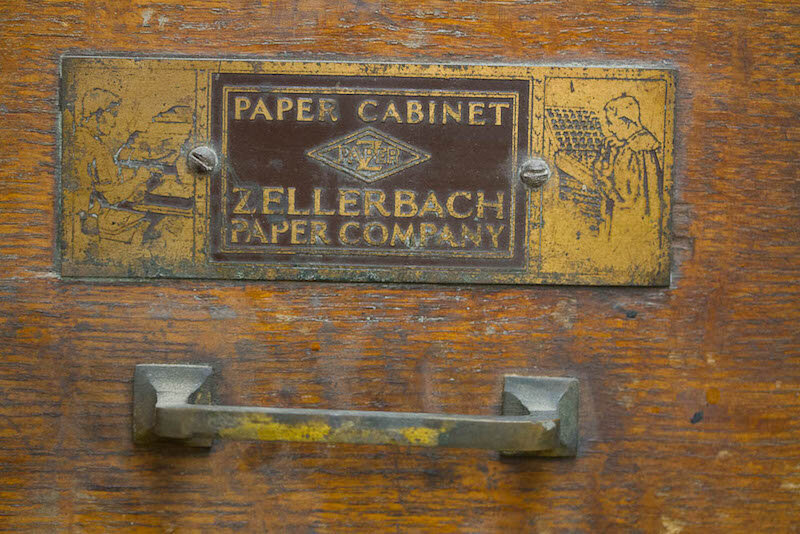
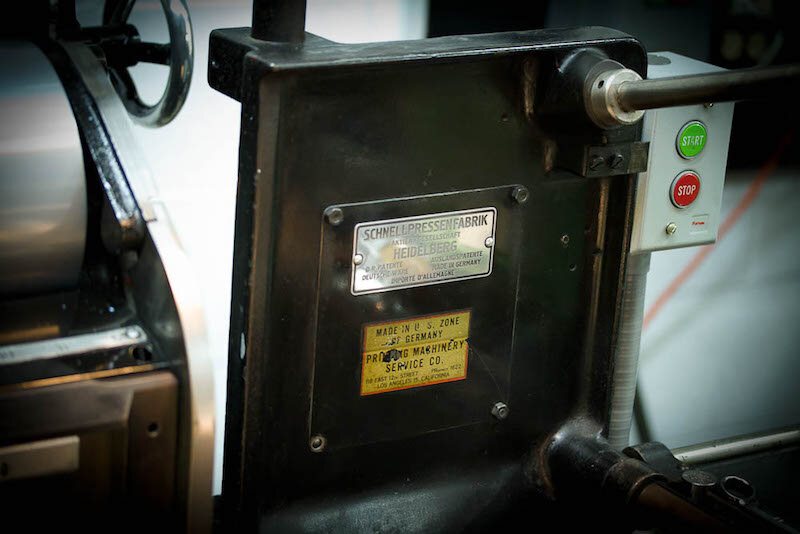
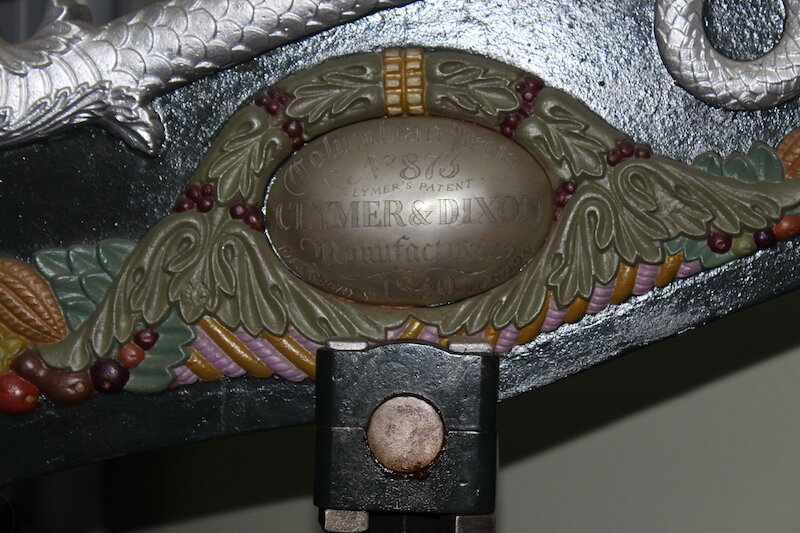
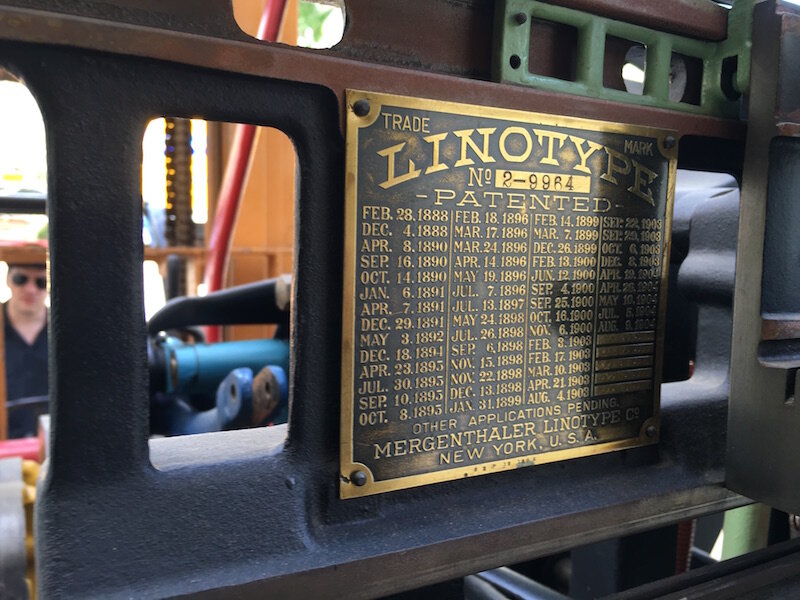
There’s so much beauty to be found at The International Printing Museum. This month we’d like to feature a selection of photographs taken of the plaques affixed to various machines and printing related equipment we have at the Museum. There’s history and stories in these metal signs.

Every faded letter, scratch and ink stain is a remnant of a time past.

Remember to Always Read the Plaque!
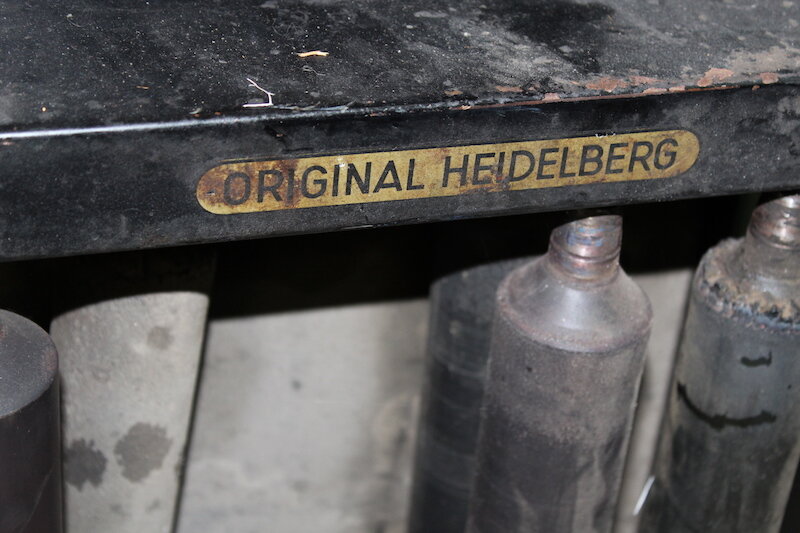
Hammond-TrimOSaw-copy-350x525.jpg

LITHOGRAPHY, HELIOGRAPHY & PHOTOGRAPHY: Part One

< Back to Blog

LITHOGRAPHY, HELIOGRAPHY & PHOTOGRAPHY:
Part One


The Graphic Effect of the Industrial Revolution

The world was an exciting and engaging place during the Industrial Revolution. In the 18th and 19th centuries, both Europe and America witnessed the creation of some amazing inventions. During this time, Eli Whitney invented the modern cotton gin, Thomas Saint designed the sewing machine, and James Watt created the world’s first efficient steam engine.

These inventions led to the development of still others, several of which had an effect on the printing industry. The steam engine, for example, helped Friedrich Koenig and Andreas Bauer to invent the first steam-powered rotary printing press. This press used a rotating cylinder rather than a flat surface, as Gutenberg designed.

This invention was not without controversy. Samuel Smiles, in his book Men of Invention and Industry, reported that the pressmen at the London Times, where the new press was located, heard rumors about the steam press and “vowed vengeance against the inventor and his invention, and that they had threatened destruction to him and his traps.” Their trepidation was warranted due to the fact that this first “modern” newspaper press was five times the speed of what came before it.

Mr. J. Walter, proprietor of the newspaper, warned the pressmen against using any violence and offered to assist those whose jobs would be lost due to the new technology. This compromise led to the printing of the first newspaper on a steam-powered cylinder press during the early hours of November 29, 1814.

Untitled-830x563.png

The Invention of Lithography

This domino effect of one invention leading to another can be found in the development of lithography.

Johann Alois Senefelder, the father of lithography, had a love for the theatre, but wasn’t a very good actor. He was, however, a very good playwright. Due to the high cost of printing, he found it hard to reproduce and disseminate his plays. So, he began looking for a less costly method of copying of his work.

One day, Senefelder was in his workshop experimenting with copper plates and other materials that could be used as a printing plate. His mother called to him because she needed pen and paper to record the clothing items that she was sending out to the laundry. Rather than look for pen and paper, he hastily reached for a block of limestone he had just prepared for one of his printing experiments. Using what was, in essence, a grease pencil, Senefelder wrote the list on the limestone intending to copy it later onto a sheet paper.

However, when Senefelder went to clean the laundry list off of the limestone, he discovered that the greasy writing on the limestone surface naturally repelled the water he was attempting to use to erase the writing. Though the surface of the stone was wet, the writing remained dry. When he applied oily printer’s ink to the wet stone it resulted in the reverse affect: the greasy writing accepted the oily ink while the wet limestone surface repelled it.

Senefelder continued experimenting with this chemical principle of oil repelling water and vice versa. By 1798, Senefelder had formally invented a new printing process, one that was completely different from both the raised letters and images invented by Gutenberg known as letterpress, and engraving, where the image is carved or scratched into a flat metal plate. He named his new process lithography, from the Greek “lithos,” meaning stone, and “graphein,” meaning to write. His invention of lithography allowed artists to draw their original artwork on a limestone surface with a grease crayon and then economically print multiple copies. Lithography quickly spread across Europe and into America.


Publishers of Cheap & Popular Prints

Two Americans who took full advantage of the new printing process were Nathaniel Currier and James Merritt Ives. Their very successful printmaking firm was based in New York City.

The firm described itself as “Publishers of Cheap and Popular Prints.” Currier and Ives published over 7,500 original lithographs between the years of 1835 and 1907.

Currier-and-Ives-Fanny-830x621.jpg

Currier & Ives employed or used the work of many celebrated artists of the day to produce the original drawings. This included artists like Frances “Fanny” Flora Bond Palmer, who liked to do picturesque panoramas of the American landscape

The lithographs were produced on lithographic limestone printing plates. A stone often took over a week to prepare for printing. Each print was pulled by hand. Prints were then hand-colored by a dozen or more women. They worked in assembly-line fashion, one color to a worker, and were paid $6 for every 100 colored prints. These artists produced more than a million prints by hand-colored lithography.

Currier and Ives were the most prolific and successful lithographers in the U.S. Their work, representing every phase of American life, was among the most popular wall hangings of the Victorian Era.


Lithography in Europe

2019-06-25-23.19.02-copy.jpg

Because Lithography was an easy medium for artists to use the process became popular throughout the world. Many famous artists in Europe who used stone lithography includes Francisco de Goya, Henri de Toulouse-Lautrec, and Paul Gauguin.

One European, a Frenchman named Nicéphore Niépce, was particularly interested in lithography. It was his interest that led to the development of another revolutionary invention of the era: photography.


LITHOGRAPHY, HELIOGRAPHY, & PHOTOGRAPHY Part Two

< Back to Blog

LITHOGRAPHY, HELIOGRAPHY, & PHOTOGRAPHY
Part Two


Last month we learned about The Graphic Effect of the Industrial Revolution and the invention of lithography. This month we’ll see how lithography had an impact on the creation of another Industrial Revolution invention, photography.


Images from Light

Nicéphore_Niépce-480x640.jpg

Nicéphore Niépce and his brother Claude were avid inventors. In the early 19th century, the brothers constructed a prototype of an internal combustion engine. Their machine was strong enough to power a 2,000-pound boat upstream on the Saône River in eastern France. On July 20, 1807, the brothers were awarded a patent for their invention, which was signed by Emperor Napoleon Bonaparte.

It was this love for creation and invention that moved Nicéphore Niépce to explore the newly invented art form of lithography. He soon realized he lacked the necessary skill and artistic ability to draw images onto the litho stones.

In her book, A to Z of STS Scientists, Elizabeth Oakes credits Niépce’s son, Isidore, with the creation of the artwork used on his lithographs. While his son was creating the designs, Niépce focused on the reproduction process. His goal was to invent a mechanical device that could produce images, thereby eliminating the need for lengthy artistic training.

All of the items necessary to create these images seemed to be right in front of Niépce, it was just a matter of putting them together. He was fully aware of inventions that could reproduce multiple images from a single plate. He understood lithography and was familiar with copperplate engraving. Combining this knowledge with his understanding of chemical reactions and his familiarity with the something known as the camera obscura (the earliest version of the camera), led Niépce to believe that he could create images employing light.


Painting with Light

The camera obscura, in one version or another, dates back to prehistory. In the 18th and 19th centuries, the device was quite popular among artists. It allowed individuals to place the camera box in front of an object and with the use of a small hole, lens, mirror, and ground glass they could see and trace an image of the object on to a piece of paper (see image below). Niépce’s dream was to use the camera obscura to produce an image on a litho stone, copper plate, or piece of paper.

Beaumont Newhall, in his definitive work The History of Photography: From 1839 to the Present, explained that in 1816, Niépce began experimenting with paper and various chemicals to “paint” with light. Niépce was disappointed with his first attempts because they resulted in producing a negative image. He wanted to “secure pictures directly in the camera” thus he needed a positive image.


The Invention of Heliography

To create positive images, Niépce turned his attention to other materials that were affected by light. Eventually, he focused his experiments on Bitumen of Judea, naturally occurring asphalt. In an 1824 letter to his brother Claude, Niépce explained he had his first real success using bitumen applied to the surface of a lithographic stone, which was then exposed to light through a camera obscura. For the first time, he obtained a fixed image of a landscape. Though Niépce’s letter claimed he had produced the first photograph, there is no physical evidence of the event: Niépce ground out the exposed image from the stone so he could use the stone in further experiments.

Niépce also explored the use of metal plates. The next attempt to record an image from light is recorded in a letter from Niépce’s son, Isidore in 1825. Niépce covered a polished pewter plate with Bitumen of Judea. He then covered the plate with a sheet of paper already printed with an engraving of a boy and a horse; both were exposed to direct sunlight. In essence, Niépce was making a contact print.

The sunlight “exposed” the plate except for the area covered by the lines on the engraved paper. According to Isidore, after the exposure was finished, Niépce “immersed the plate in a solvent which, bit by bit, brought out the image which, until then, had remained invisible…” Niépce had created a photochemical process to record a positive image onto a plate. He called it heliography, which literally means “sun writing.”

The lines on the plate were too shallow to fill with ink and reproduce multiple copies of the image. Thus Niépce sent the plate to an engraver who worked the lines of the plate so the image could be replicated.

Heliography-copy.png

Examples of his process still survive today. The image on the right is a print made from one of Niépce original 1825 heliographic plates. The print is simply a sheet of plain paper printed with ink using a printing press, like ordinary etchings, engravings, or lithographs. What makes this print different is that the printing plate used was created photographically by the heliographic process rather than by hand engraving or drawing on lithographic stones. The print can be found in the collection of the Bibliothèque Nationale de France in Paris. (https://pdfs.fr/)

The Invention of Photography


View-from-the-Window-at-Le-Gras-copy.png

These “sun writings” were more photo-engravings than a photograph. Not satisfied, Niépce began experimenting with glass, copper, and polished silver plates. He even tried using lavender oil and iodine vapors that would interact with the Bitumen of Judea. His experiments led to superior quality images.

While the exposure times for the images were long, sometimes hours or days, in 1826 or 1827 Niépce finally created what is considered genuine photographs in black and white on a metal plate. The preciseness of these images was amazing for the time. Below you’ll find an image of the oldest surviving photograph formed in a camera.

The photograph, View from the Window at Le Gras, shows parts of the buildings and surrounding countryside of Niépce’s estate, Le Gras, as seen from a high window.


The Development of Photography

Louis-Jacques-Mande-Daguerre-.png

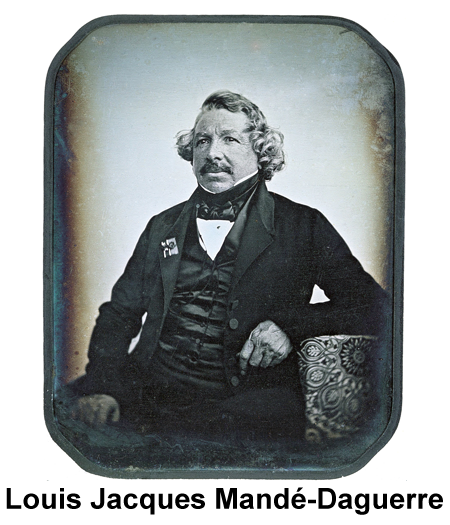
While Niépce was improving his invention, not far away, Louis Jacques Mandé Daguerre was also experimenting with the camera obscura. Except Daguerre was using phosphorescent powders to record an image. Unfortunately, these images were only visible for a few hours, and then they slowly faded away. According to Newhall, both inventors shared a mutual lens maker, Chevalier of Paris. Through this mutual acquaintance, the two began exchanging correspondence.

At first, both men were cautious, not wanting to reveal too much to the other regarding their experiments. Then the two met in September of 1827. Niépce wrote to his son Isidore to tell him about the meeting.

“I have had many and very long interviews with M. Daguerre,” wrote Niépce. “He came to see us yesterday. His visit lasted for three hours…and the conversation on the subject which interest us is really endless….”

After three years of correspondence and meetings, the two men finally joined forces and became business partners in December of 1829. Unfortunately, four years into their partnership, Niépce suffered a stroke and died; Isidore took his father’s place in the business.

Over the following years, Isidore Niépce and Louis Daguerre improved on the photographic process. Their modifications eventually led to the development of what they termed “daguerreotype.”


Photography Evolves

Nicéphore Niépce’s understanding of lithography led to his development of heliography. By trial and error, he was able to improve his technique, and his partnership with Daguerre advanced the process yet further. After he was gone, photography continued to evolve.

George-Eastman-1890.png

Englishman William Henry Fox Talbot used paper as an intermediate negative to produce the first negative-positive process in 1841. This modification made it possible to make multiple copies of the same image.

For decades, photographers continued to use glass, metal, and paper as the base for their images. It was the American George Eastman who had the idea to replace those traditional base materials with celluloid rolls, and the concept of film rolls was born in 1888.

It’s noteworthy how one invention often inspires the creation of another. The evolution and stories of lithography and photography are only two innovations that had a profound effect on the printing industry. Whether through serendipity, trial and error, or evolution, the development of technology during the Industrial Revolution was a testament to man’s inventive drive and creative abilities.

At The International Printing Museum in Carson, California, visitors can explore these inventive stories and so much more. Every year 25,000 students are exposed to the collection through working and engaging tours. Just maybe some of them will be inspired to create and invent their own solutions to the problems of the future.

THE HISTORY OF THE BOOK: PART 1

< Back to Blog

THE HISTORY OF THE BOOK: PART 1

Palm-leaf-LinkedIn-size-copy-2.jpg

When we think of Gutenberg, we think of books. His invention of the adjustable mold and his use of metal alloys allowed for the mass-production of movable metal type. This invention, combined with his use of oil-based ink and a wooden printing press, led to the first printing of the most read book in the world, the Bible.

While it was Gutenberg’s system that made it economically viable for printers to mass-produce books, the concept of the “book” pre-dates Gutenberg by thousands of years.

Diamond-Sutra-labeled-1024x869.jpg

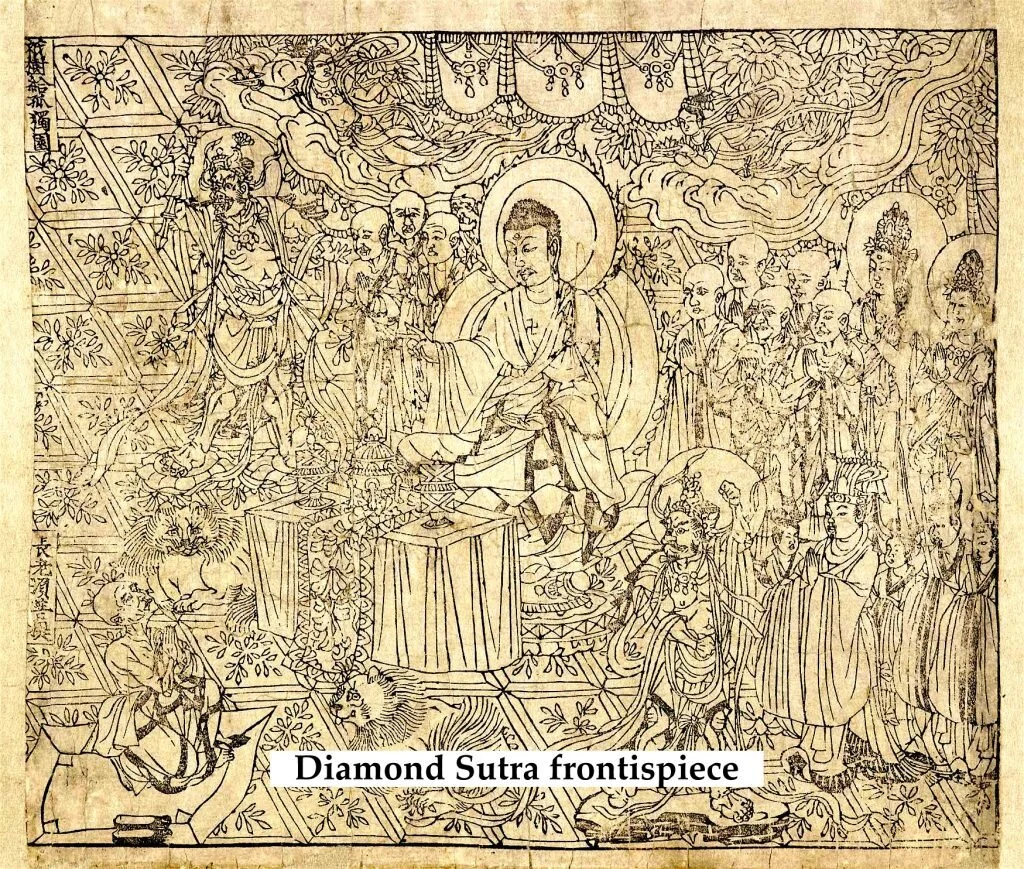
The oldest surviving printed book, The Diamond Sutra, dates from 868 AD. This woodblock-printed paper scroll contains a Buddhist text. It also includes an inscription on the lower right-hand side that reads “Reverently made for universal free distribution by Wang Jie on behalf of his two parents.”

Woodblock printing is a labor-intensive process and calls for the collaboration of several skilled craftsmen. For each page to be printed, a block of fine-grained wood, about an inch thick, was needed.

Next, the text must be carved into the block of wood. This is a relief printing process, so the artist needs to cut away the parts of the wood that will not print. This leaves only the raised portion, the Chinese characters, to receive the ink. And, if the artisan made a single mistake in carving, he would have to throw away the wood block and start again from scratch. Also, the carving must also be done in reverse so that the final printed product will be right reading.

The Diamond Sutra is 17-and-a-half-feet-long. A book this size would take artisans months to carve the many wood blocks needed to reproduce the book.

The book was discovered in the Cave Temples of Dunhuang. This network of over 500 caves was an old outpost on the Silk Road at the edge of the Gobi Desert. Also known as the Mogao Grottoes, or Caves of the Thousand Buddhas, they’re a UNESCO World Heritage site.

The Diamond Sutra was found in the Library Cave of the complex. The cave contained nearly 50,000 ancient manuscripts, silk banners and paintings, fine silk embroideries and other rare textiles dating from before the early 1000s.

This book is a excellent example of the power of print and written communication. The Diamond Sutra is part of a larger group of sacred texts in the branch of Buddhism most common in China, Japan, Korea, and Southeast Asia. This is interesting because Buddhism was actually founded in Northeastern India during the sixth century BC. This means the contents of the book was originally written in Sanskrit and then translated into Chinese and disseminated throughout Asia.

buddhist-birch-bark-scroll-labled-copy-1-350x639.jpg

Before The Diamond Sutra was printed, other Buddhist books were transported along the Silk Routes to areas in Northern, Central, and Southeast Asia. Archeologists have found what may be the oldest surviving Buddhist texts in what is today is Pakistan and Afghanistan. These birch bark “books” date to the 1st century AD.

These books were not printed like The Diamond Sutra. These manuscripts were written on tree bark. In India and many parts of ancient Asia, it was common to write on prepared plant surfaces. In addition to bark, palm leaf books were prevalent. Today India possesses an estimated five million manuscripts, many on palm leaves that cover a variety of themes, scripts, languages, calligraphies, illuminations, and illustrations.

Palm leaves were among the first writing materials to be used, predating papyrus. Some sources say that Sanskrit was first written on this material more than 6,000 years ago.

The bookmaking process is relatively straightforward. Take a look at the video from the Rangiri Technical Centre and see how the palm leaves are prepared and the books are produced.

Palm-leaf-book-labeled-sm-1024x683.jpg

I found it especially interesting how the monk held the leaves in one hand and with the other inscribed lettering from left to right using a needle-like instrument. It appears as if he is writing, but the results are nearly invisible. Only when the leaf is wiped with soot or another pigment, sometimes mixed with oil, is the writing made clear.

Once the leaf is cleaned of excess pigment, the dark residue remains behind in the scratches carved into the surface. The books are then bound together with string using the holes drilled into them when the leaves were prepared for writing.

Books made from palm leaves were convenient to carry and made it easy to travel with a book.

Gutenberg’s printing press allowed the common man to read the bible and draw his own conclusions, giving strength to the Reformation already in progress in Europe. In much the same way, a belief system that began in India was able to spread all across Asia. Buddhist missionaries and pilgrims traveling along the Silk Routes, first with their religious palm leaf and later printed books in hand, were able to spread Buddhism to millions of people. The graphic object known as the BOOK was the object that made this transformation happen.

THE HISTORY OF THE BOOK: PART 2 Saint Patrick

< Back to Blog

THE HISTORY OF THE BOOK: PART 2
Saint Patrick


When most people think of Saint Patrick’s Day, they think of shamrocks, green beer, and parades. When I think of Saint Patrick, I think of monks, monasteries, and manuscripts. You may be surprised to learn that, if not for Saint Patrick and the monks and missionaries that followed him, civilization as we know it may not exist. To understand this, we need to look back 2,000 years to appreciate the impact of the Roman Empire.


The Roman Empire

Long before the birth of Saint Patrick, the Roman Empire ruled most of the known world. At its peak, the empire reached from Britain into most of Europe and extended into the Middle East and North Africa.

While the Romans, like the Greeks before them, relied heavily on an oral tradition, they were also literate people. An empire the size of Greece or Rome needed written laws and codified business practices. Thus, the Greeks and Romans kept excellent written records. These were written on clay and wax tablets, and on papyrus. Here’s a section of Aristotle’s Constitution of the Athenians. 

Aristotle’s-Constitution-of-the-Athenians.png

In addition to record keeping, the Romans were big on libraries. The first public library in Rome, established by Asinius Pollio in the Atrium Libertatis, was bilingual, containing both Greek and Latin texts. It also held portrait busts of authors and served as a museum for works of art in general. These libraries could be found throughout the empire.

In 2018, archaeologists unearthed what may be the oldest library in the Roman Empire’s northwest provinces. The library’s remains were discovered in the middle of Cologne, Germany. Researchers think the library dates to the middle of the second century, around the same time the Romans built the library at Ephesus.


Rome’s Public Libraries

A visitor to a Roman library would quite likely find a copy of Rome’s newspaper, the Acta Diurna, (translated Daily Acts) which contained public notices hand-written, on sheets of papyri.

Or a visitor may pick up be a copy of Assemblies of Aesopic Tales, stored within the niches of the library’s walls. With this book, they could entertain and educate their children with stories about The Grasshopper and the AntThe Fox and the Grapes or The Tortoise and the Hare.

If a visitor was interested in philosophy, they might pick up a work by one of the most prolific writers of ancient Rome, the brilliant Roman statesman Marcus Tullius Cicero. It was Cicero who introduced the Romans to the chief schools of Greek philosophy. He wrote political essays as well as books on ancient philosophy. Here’s a 5th century bilingual, Latin and Greek, papyrus of a Ciscro speech.

Ciscro-speech-5th-century-bilingual-.jpg

The influence of the works of Aesop and Cicero, along with other Greek and Roman authors, on western civilization cannot be overemphasized. These ancient works were so important that, once Gutenberg perfected printing, they were some of the first books printed.


The Incunabula

Caxtons-Aesop’s-Fables-666x1024.jpg

In 1480, Lorenzo de Medici, de facto ruler of the Republic of Florence, commissioned a special volume of Aesop’s Fables for his young son, Piero. This is one of the first known examples of the fables being printed specifically for a children’s audience.

n 1484 Englishman William Caxton published the first English-language copy of Aesop’s Fables, illustrated with woodcuts. Caxton translated the fables into English from a French translation of the works. You can see a page from Caxton’s book here.

The first extant book printed in Italy was Cicero’s De oratore. It was printed by two clerics, Konrad Sweynheym from Mainz and Arnold Pannartz from Cologne. The two traveled to the ancient Benedictine monastery at Subiaco, in the mountains east of Rome. There, in 1465, they produced the book and taught some of the monks at the monastery how to print. Some historians believe Sweynheym may have worked with Gutenberg from 1461-1464 while living in Eltville, Germany.

Cicero’s importance was again emphasized with Sweynheim and Pannartz’s publication of the 1468 edition of Cicero’s Epistulae ad Familiares. It was at this time that the two printers developed a unit of measurement for typography called a cicero. It’s just a little larger than a pica. Printers in Italy, France, and other continental European countries continued to use this measurement for many years.


Saint Patrick

Book-of-Kells-full-830x1082.jpg

You may be asking yourself, what does all this have to do with Saint Patrick? Well, the patron saint of Ireland was a Roman citizen of Britain. And, living in the 5th century A.D., he witnessed first hand the slow fall of the western half of the Roman Empire.

When the Empire fell, barbarian tribes such as the Visigoths, Angles, Saxons, Franks, and others took turns ravaging the Empire and Europe entered the Dark or Early Middle Ages.

Things were different in Ireland, though. Through his missionary work, Saint Patrick instilled a sense of literacy and learning in the people. This created the conditions that allowed Ireland to become “the isle of saints and scholars.” According to Thomas Cahill, author of How the Irish Saved Civilization, Patrick’s impact on Ireland was impressive.

“As the Roman Empire fell…unwashed barbarians descended on the Roman cities, looting artifacts and burning books, the Irish, who were just learning to read and write, took up the great labor of copying all of Western literature — everything they could lay their hands on,” writes Cahill.

As one of the most successful Christian missionaries in history, Saint Patrick established Ireland’s first monasteries. In these monasteries were pious and self-disciplined monks who made it their mission to copy all forms of literature, sacred and secular.

The most famous example of the monks’ rich legacy is the 1,200-year-old Book of Kells. This spectacularly illuminated manuscript of the Gospels can be found today in Dublin’s Trinity College. Its decorations and calligraphy have earned it the reputation as the world’s most beautiful book.

So, as the barbarians ravaged most of Europe, patient scribes in Ireland labored for centuries in their scriptoriums, small rooms devoted to the writing, copying and illuminating of manuscripts. These monks, inspired by Saint Patrick, and others who followed including Saint Columba, copied Greek, Roman and Jewish classics as well as Christian texts. They preserved the works of Homer, Virgil, Demosthenes, Cicero, Plato, and Aristotle. Without these monks, all would have been utterly lost to posterity.

If not for the work of these Irish monks, there would have been no Aesop’s Fables for Caxton to print. Sweynheim and Pannartz would have none of Cicero’s works to publish. And civilization, as we know it may not exist.

So the next time you lift a pint of green beer to your lips, take pause and thank Saint Patrick and the monks of Ireland for preserving Western culture by safeguarding the texts of the ancient world.

THE HISTORY OF THE BOOK: PART 3When is a Book Not a Book?

< Back to Blog

THE HISTORY OF THE BOOK: PART 3
When is a Book Not a Book?

egyptian-book-of-the-dead.jpg

What makes a book, a book? Must a book contain a story? Must there be multiple pages, bound together? Must it be hand-held? Does a portable electronic device count? Is an audiobook a book? Is a book of stamps a book? What about a record of financial transactions as in, the company’s books show a profit? Are any or all of these considered books?

The Merriam-Webster dictionary has 18 different definitions for the word “book.” The first two are what most of us perceive as a traditional book.

  1. A set of written sheets of skin or paper or tablets of wood or ivory

  2. A set of written, printed, or blank sheets bound together between a front and back cover

In my earlier posts, The History of the Book, Part 1, and The History of the Book, Part 2, I discussed books that adhere to these traditional definitions. In this post, we’re going to explore what may be considered an unconventional view of the book.


Traditional, Yet Unconventional Books

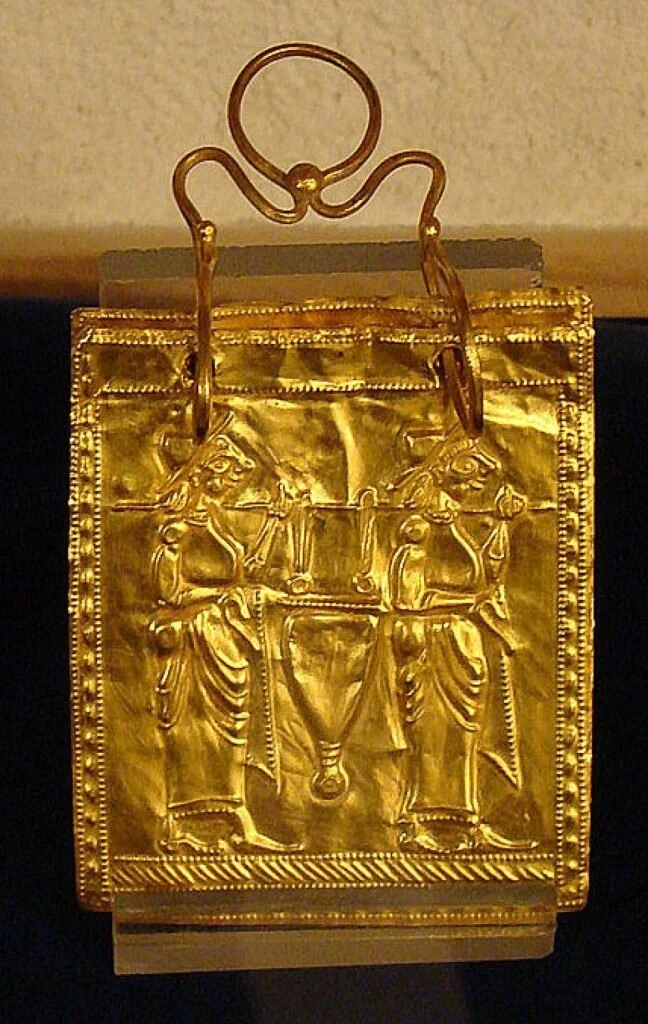
Located in Bulgaria’s National History Museum is a set of “written sheets bound together” to make a rather unconventional book. It predates the Gutenberg Bible, the Diamond Sutra, and the Book of Kells.

Over 2,600 years ago, the Etruscans, a civilization of ancient Italy, created a book made of gold. It’s composed of six pages of 24-carat gold, bound together with golden rings. It is thought to be a type of prayer book made for the funeral of an aristocrat. The Etruscans were not the only society to write on gold.

Dating from around the same time, archeologists have found sheets or plates of gold containing both Etruscan and Phoenician writing.

These gold sheets, on display at the National Etruscan Museum in Rome, Italy, contain holes around the edges. Scholars believe these holes were used to bind the pages together, like a book.

a-648x1024.jpg

Truly Unconventional Books

b-768x869.jpg

When is a book not a book? One of Merriam-Webster’s definitions for a book reads, “all the charges that can be made against an accused person.” You’ve no doubt heard the phrase “they threw the book at him.” Based on this definition, the Code of Hammurabi could be called a book.

The Babylonian King Hammurabi reigned from 1792 to 1750 B.C. He enacted one of the earliest and most complete written legal codes. The code covered numerous topics including slander, theft, liability, adultery, divorce, and perjury. The Code of Hammurabi could be found all around the kingdom written on baked clay tablets and basalt steles.

Clay tablets were the writing substrate of choice throughout Babylon and most of Mesopotamia. Many of these tablets were used to record financial transactions. It was a way for a business to keep their “books” in order. Many tablets contained great works of literature that were held in large libraries.

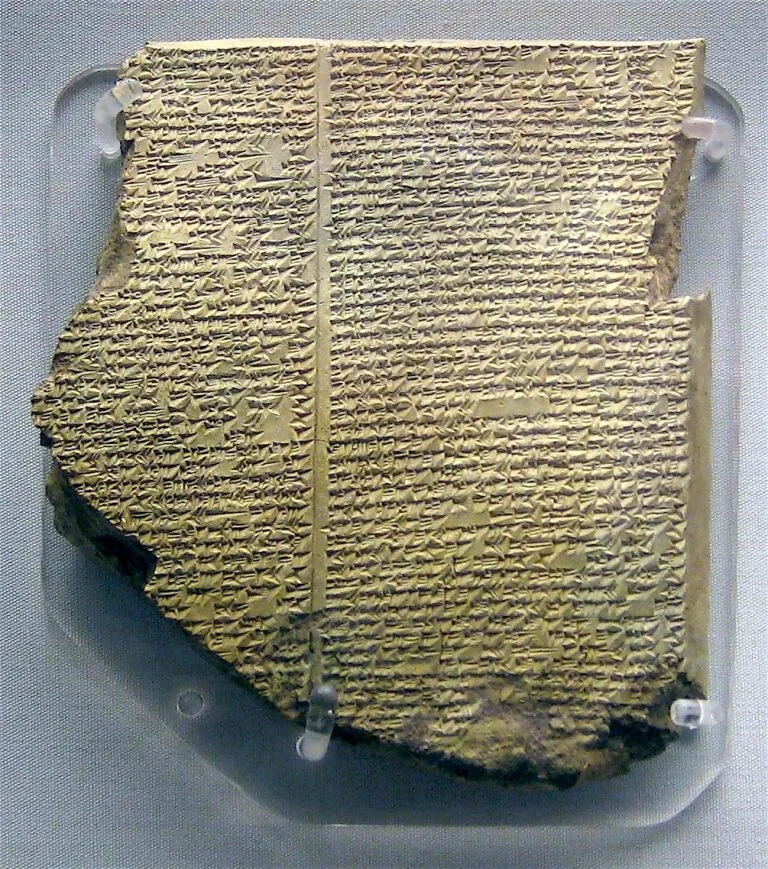
King Ashurbanipal of Assyria established a library in the city of Nineveh with over 30,000 clay tablets. In the ruins of that library was found one of the oldest adventure stories still in existence, the Epic of Gilgamesh.

The Epic, comprised of 12 individual tablets, was written around 2100 B.C. It was on tablet 11 that the original Mesopotamian story of the Great Flood, which pre-dates the story in the Bible, was found.

In this account, you’ll find many similarities to the biblical version of the flood. There’s a man, Utnapishtim, who is told by a god to build a boat. This god, Ea, gave Utnapishtim precise dimensions for the boat and that it was to be sealed with pitch and bitumen. Once completed, Utnapishtim’s entire family went aboard together with his craftsmen and “all the animals of the field.” Soon after, a violent storm arose, and the rest of humankind was annihilated. After the rain, the boat lodged on a mountain, and Utnapishtim released a dove, a swallow, and a raven. When the raven failed to return, he opened the ark and freed its inhabitants. He then offered a sacrifice to the gods, who smell the sweet savor and gathered around. This is just one of many stories found in the Epic of Gilgamesh that Bible readers may find familiar.

Another story from the Epic that parallels a biblical account includes that of Ninti, the Sumerian goddess of life. The story explains that she was created from the god Ea’s rib. She was created to heal Ea after he had eaten forbidden flowers. Some say this story served as the basis for the account of Eve creation from Adam’s rib in the Book of Genesis.

Religious books are some of the oldest unconventional books. The Egyptian Book of the Dead, dating from nearly 4,000 years ago, was not one book but rather a body of texts that contained spells and illustrations written on papyrus scrolls. These “books” were placed in the tombs and graves with the deceased. Each was written specifically for the individual who could afford to purchase one. These “books” were designed to guide the deceased through the dangers of the underworld, ultimately ensuring eternal life. Much of the content of the scrolls originated from concepts depicted in tomb paintings and inscriptions from as early as 2670 B.C.


Prehistoric Books

c.png

Reaching back even further in history, can we say humans living before the Egyptians and Sumerians, those living in prehistoric times, did they have books? The word “prehistoric” means before history, before writing. So, can we truthfully say that people living 35,000 years ago had books? Let’s take a look at another of Merriam-Webster’s definitions for “book.”

The dictionary’s definition #3 reads, “something that yields knowledge or understanding.” Based on this definition, there were many “books” created in prehistory.

Today we have picture books that tell a story and individuals, living as long as 35,000 years ago, also told their stories through pictures. All around the globe, in places as diverse as Bulgaria, Argentina, Somalia, India, France, Spain, and Australia, cave paintings can be found. There are images of powerful bulls in the caves at Lascaux, France and Altamira, Spain. Beautiful human handprints are found in the Cueva de las Manos, in Argentina. And, some of the Australian Aboriginal rock art (see above image) contains maps to local sources of water. All are examples of humans communicating with each other.

Through the centuries, the technologies may have changed, but the goal remains the same. Humans need to communicate with each other. We love to tell stories, offer advice and direction, and discuss and preserve economic and environmental information. All of which is made possible due to the book.