

1845 ADAMS ACORN PRESS
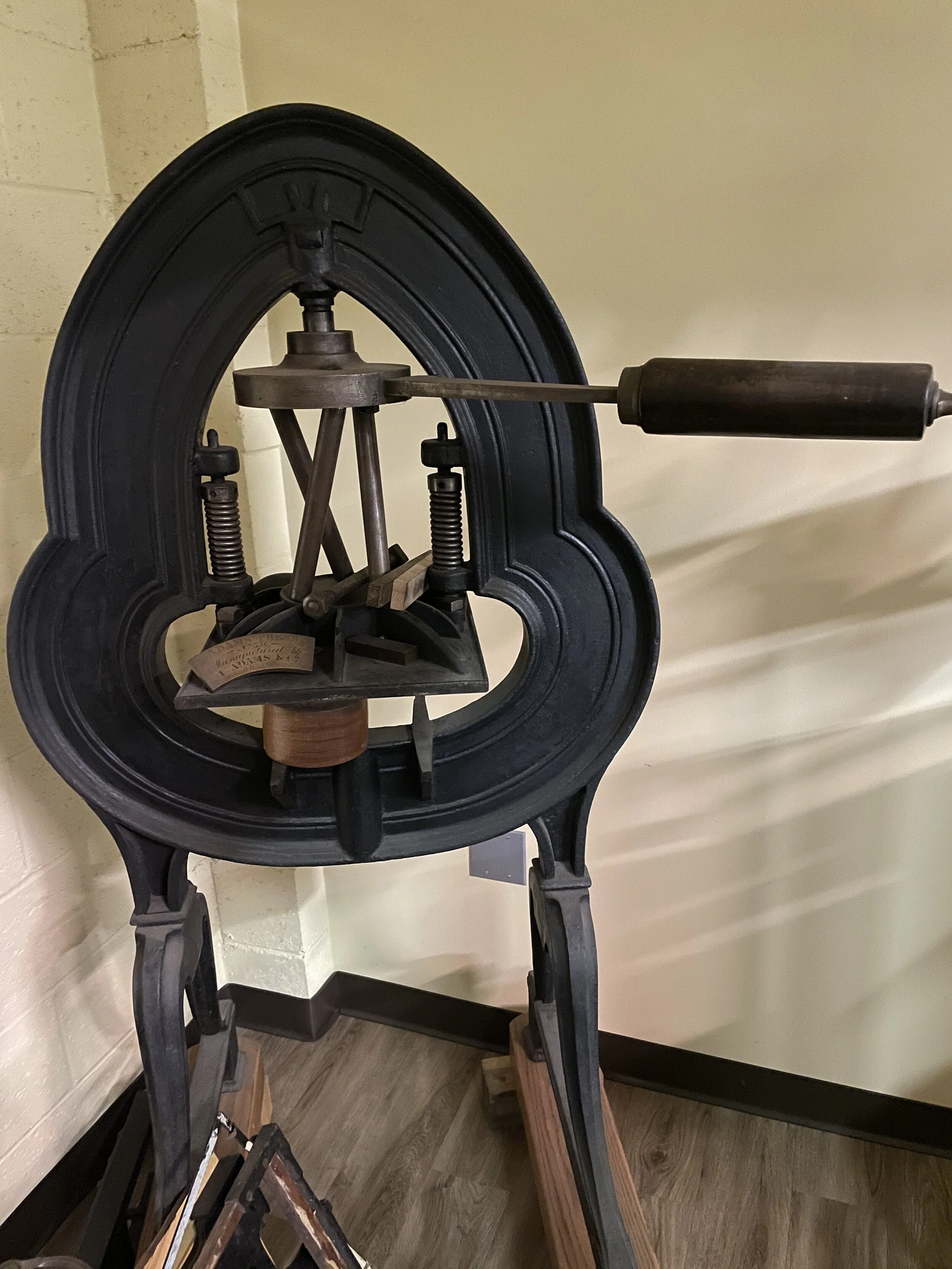
One of the most distinctive types of 19th-century iron hand presses is the acorn press. While most handpresses assumed a similar shape to the wooden common presses that predated them, these squat metal presses had a large iron frame in the shape of an acorn that housed the press’s toggle mechanism.
The design for the Adams Acorn press in the Museum’s collection was patented by Rev. Abraham Ogier Stansbury in 1821. Stansbury was a jack of all trades. In addition to being an inventor, he was a bookseller, a publisher, a minister, a grocer, and a superintendent at a school for the deaf. Perhaps inspired by his previous experience with printed materials, Stansbury designed a feature with a toggle mechanism that differed from the toggles on other iron hand presses, like the Columbian presses that were on the market at the time. Initially, the press was made out of wood and resembled a common press. Eventually, it was made entirely out of metal, with its distinctive acorn-shaped iron frame. Neither the acorn shape nor the toggle was a completely new idea, though. The acorn design was likely borrowed from the Smith Acorn Press, which was already on the market, and the toggle might have already been in use on other common presses in England

The Cincinnati Type Foundry was the first company to manufacture the Press when Stansbury obtained his patent in 1821. Later on, it was produced by the manufacturing giant R. Hoe & Co. The Museum’s acorn press was manufactured by Isaac Adams sometime after 1845, when Stansbury’s patent had lapsed.
This Adams Acorn Press was the pride and joy of Robert Jones, an artist and printer residing in Stamford, CT. He had acquired the press back in the 1950's from another hobbyist collector. Jones kept the press in a little shop behind his house that he nicknamed “The Glad Hands Press.” We acquired it from him in August 1990, when Director Mark Barbour went on a road trip in search of a Stansbury press to add to the collection and connected with Jones while he was in the midst of clearing out his shop.